How has Religion silenced the women, creatives, and thinkers
An in-depth critique of how religion has historically silenced women, creatives, and thinkers, exploring gender biases, resistance to innovation, and the influence on modern atheism and reformist movements.
 KingAlfred
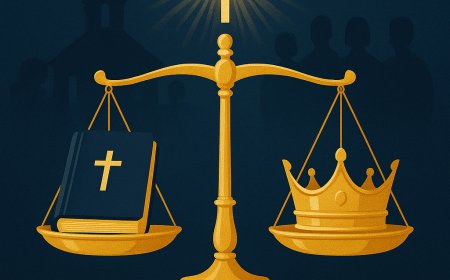
Religion has shaped the entire course of human history and existence. At what cost though?
This controversial question has been ignored, not because it's irrelevant, but because of the harsh realities surrounding it. Lucky for you, I'm a sucker for matters of this magnitude and won't shy away from it. From the first of mankind to humans now, religion has greatly influenced the way of life, thoughts, and actions of its followers, but why was the standard for holiness lesser for men?What are the biased notions being passed to silence creatives and thinkers? Has this influenced atheism? Let's dig in.
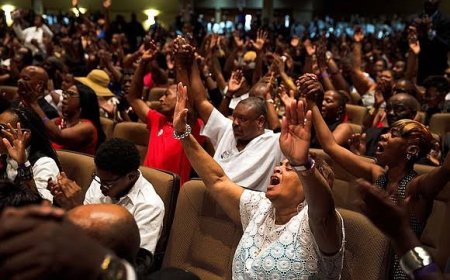
As stated earlier, religion has been the hub of human existence historically. Due to its prehistoric existence, religious laws and conduct have been known to clash, and sometimes counter the modern day way of life as they were set aside long before civilization. Some of these religions are Christianity, Islam, Judaism, Buddhism, and many others.
On multiple occasions, these religions emphasized submissiveness as a trait and attribute of an ideal woman — ‘a pious woman’is a subtle word that describes it. The message of holiness is thought differently in relation to women. Submission and meekness is the description of holiness for women from the very beginning even till now. But why aren't men seen in this light?. Whether or not its intention was to portray women in this form, this is the interpretation and model that was and is still being passed across today. A wild notion that boxes a woman to breeding and household responsibility, places the man as lord over them, prevents them from certain roles in the body of religion like Father, Pope, Imam, and spiritual head, hence limiting their influence and contribution in these areas and making them somewhat passive.
From the inception of religion, the model prophets or leaders had very few Women compared to the men and it is still so today. The positions aforementioned are only occupied by men and every other position has men as the majority. Women have also been portrayed as lustful and temptatious in many cases. In Islam, women's voices are called “awrah” (a source of temptation), while christians often compare them to Jezebel, a lustful and despised woman in the bible. Men on the other hand were never seen in this light, even when they exhibit a lascivious nature. Seeing this, it is easy to conclude that women were generally considered as unholy.
Some leaders across these religions have argued that this notion on women is entirely a misconception and out of context. I can't say for sure if debunking this ideology is a “hail mary” attempt to save and protect the religions image or that they are right and doctrines of this sort have been taken out of context for a long time now. If it's the first instance, we can then say that the ancient perceptions and teachings have little room for civilization and equality of rights, which is the model of modern day society. So yes, it has influenced atheism. A religion that is perceived to punch down on women would definitely be frowned upon.
For the creatives and idealists, their fight is a lot tougher. Religions have always had a central truth and doctrine which doesn't change even in a constantly changing world. A desire for creativity and different opinions would always be frowned upon by the diverse religions. Let's go back in history for our first instance. William Tyndale, the first man to translate the bible from its latin translation to English was burnt alive in Antwerp for his troubles. He believed that the bible can and should be translated for easy readability and promotion of the gospel but his idea was frowned upon and he met fierce resistance. This led to his assassination on October 6, 1536. Upon his death, his work was finished by Coverdale and thousands of copies were distributed. By this time, the idea was welcomed by King Henry vii. The idealist behind this great work paid the price with his life though.
Take technology as another instance, there was a need for religions to adopt and adjust upon its introduction and it did. But let's not act like it wasn't frowned upon at first. When soft copy bibles and Quran was introduced, the religious bodies went BUCK WILD. With messages like the scripture cannot be changed to fit in the worldly pattern, Soft copy bible or Quran is not acceptable by God, and many more but its need was soon realized. The advent of COVID-19 was a final nail to the coffin. Seeing how much they would be unable to preach, teach, and function without embracing technology. The realization was made and it can be said the creatives won this bout.
Religions and its leaders have always disliked being questioned or held accountable. Yeah, I said it. When reformers and intellectuals see things differently they are always rebuked. Blind followership is being pushed as righteousness.On multiple occasions, these ones are portrayed as rebels, enemies of the gospel, and sometimes called Anti–Christ bluntly. Because of this, there is a surge in non-believers and atheists who no longer see a cause for religion. I do not agree with them, but their reasons are somewhat valid.
No one is getting lynched again, at least we're past that age. But the discrimination of these ones is still present, it's just a different kind of punishment. They should not have to face condemnation and disregard for having an uncommon field of thought as their goal is to advance the said religion. A consideration for advancement should be made rather than condemnation. I am a reformer, I am a Creative; so please, stop ‘punching down’ on us.