GROWING UP NIGERIAN: A Continuous Journey Of Chaos, Community and Home.
Growing Up Nigerian" is a vivid picture story that captures the unforgettable and complex experience of being raised in Nigeria. Through ten carefully selected images and narratives, it explores the interplay of tradition, discipline, communal upbringing, cultural peculiarities, and the chaos that molds every Nigerian child. From the aroma of akara and the pains of cornrow hair days to the energy of Monday school mornings, university struggles, and job-hunting blues, this visual essay is a nostalgic and heartfelt tribute to the Nigerian experience — raw, beautiful, and enduring. A vibrant picture story of growing up Nigerian — from akara mornings and school rushes to university life, job struggles, and the beauty of community.
 Favour
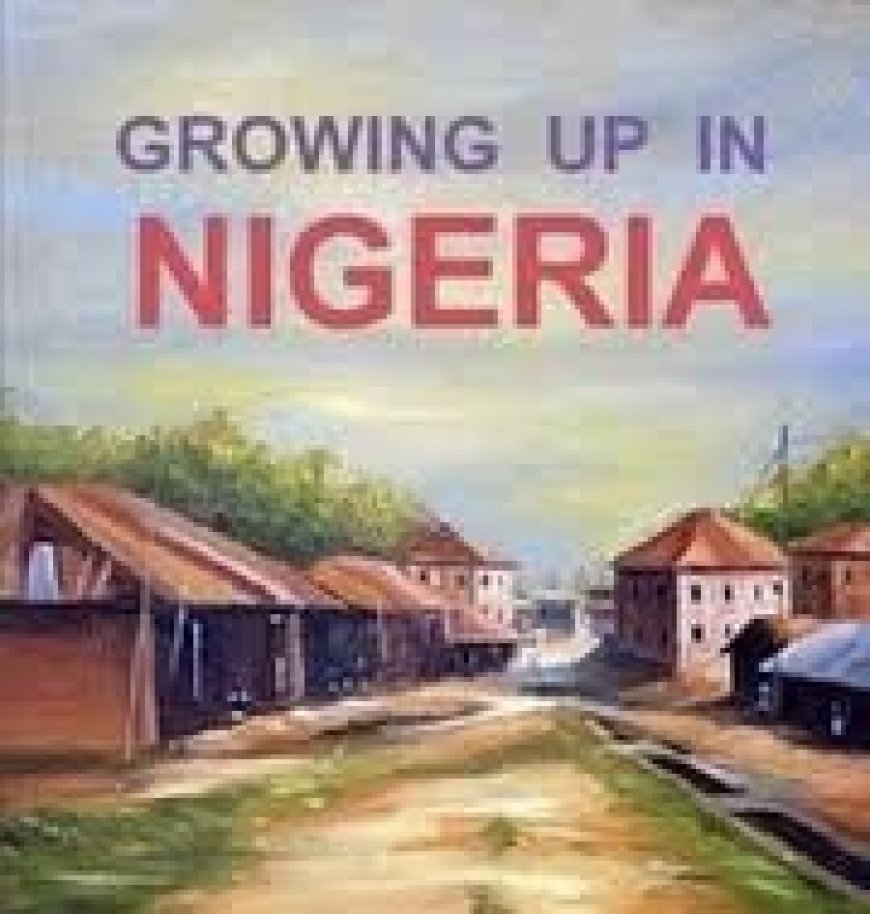
Growing up Nigerian is more than just childhood or adulthood; it's a rollercoaster of traditions, chaos, joy, discipline and the entire community at large. There is a popular saying in this part of the world that says ‘It takes a whole village to raise a child’. And I can tell you with all certainty that its practical application happens in the growing process of every true Nigerian child. Its peculiarity stems from hearing your mother scream your name saying “Go and get my slippers”, to the fear of the rod our parents never spared. Its familiarity shows in the frequent NEPA blackout, followed by the screams ‘Up Nepa’ when the power holding company decides to bring back the light.
Through ten images this piece explores what it truly means to grow in Nigeria: the beauty, the madness, and moments that shape us forever.

Image 1: Akara and pap
This first image represents the familiar Saturday mornings in every Nigerian traditional home. Akara and pap brings back nostalgic moments of every full-grown Nigerian adult. The hot meal made from grounded beans and fried in hot groundnut oil or palm oil warms the palate every Saturday morning.
When not fried at home, the children have no need to worry because they can always go to the ‘Akara woman’ down the street and although some children prefer custard, the real ones know it's always pap and Akara.
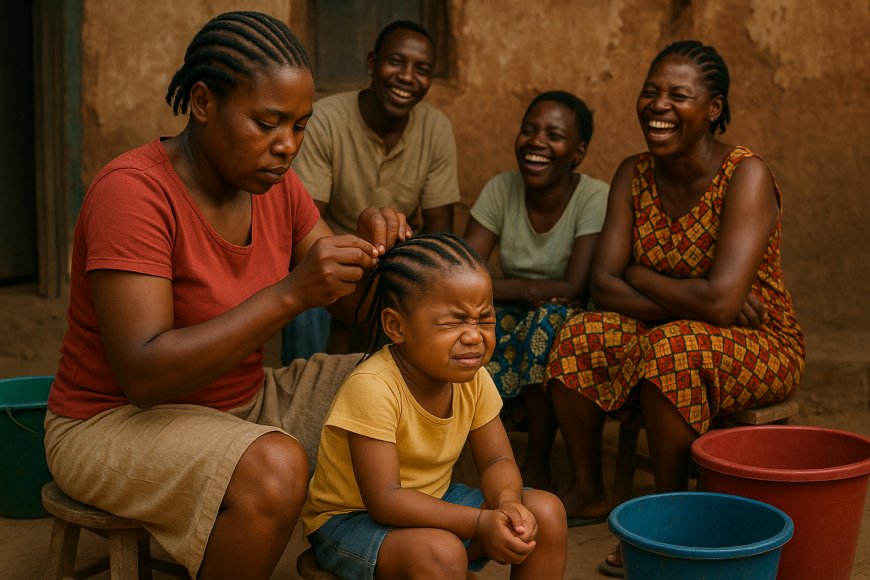
Image 2: A mother plaiting her daughter's hair surrounded by neighbours.
This image typically represents Saturday evenings as the mother plaits her child's hair surrounded sometimes by neighbours, or her other children waiting to take their turns. Our scalps suffered for the beauty we wanted to showcase ranging from African thread, the most painful of them all, to cornrows.
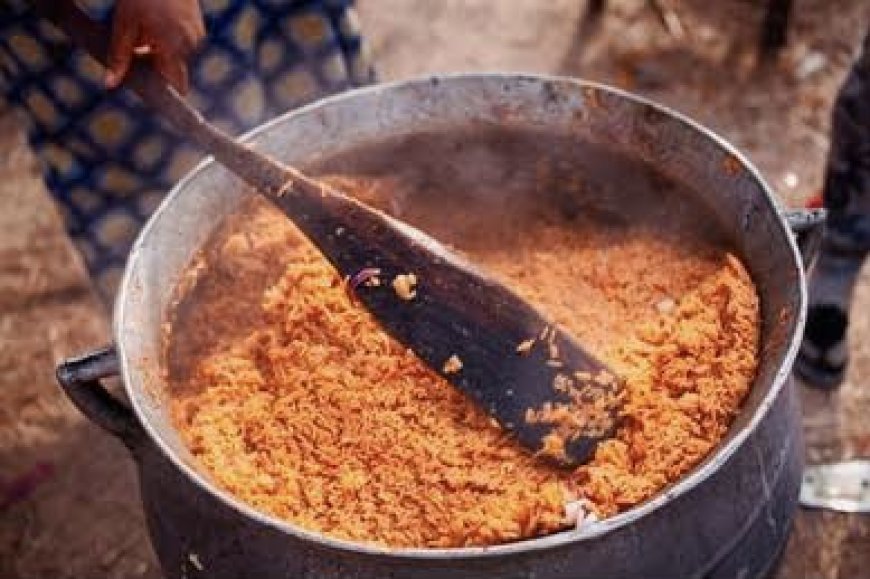
Image 3: A hot pot of smoky jollof rice.
From the compound to the kitchen, the weekends were not complete without Sunday rice.
Every true Nigerian child knows the importance of Sunday rice because they know it always tastes different. It wasn't just about the rice, it is a tradition that bonds families together. The rice is made with perfect ingredients like tomatoes. Onions, seasoning cube and salt to taste with special proteins like meat, fish, egg and even chicken for the ones who could afford it.
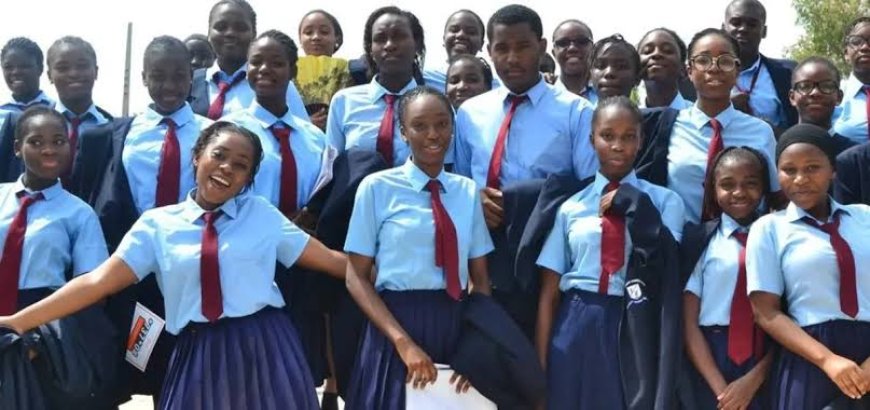
Image 4: Secondary school Nigerian students.
From the familiar Sunday rice to Monday mornings, you never forget the hustling and bustling, to the screams of our mothers “ Are you still sleeping?”. The Monday morning rush was always felt. The need for parents to get their children to school on time either by private cars or the public transports.
The secondary school phase is one that is thoroughly felt by every Nigerian student from government schools to the private ones. The morning assemblies were for shouting the national anthem and national pledge after the morning devotion. The favorite teachers, the ones we hated, to the fear of bringing home the wrong results to your parents, were always the highlights of the secondary school journeys.
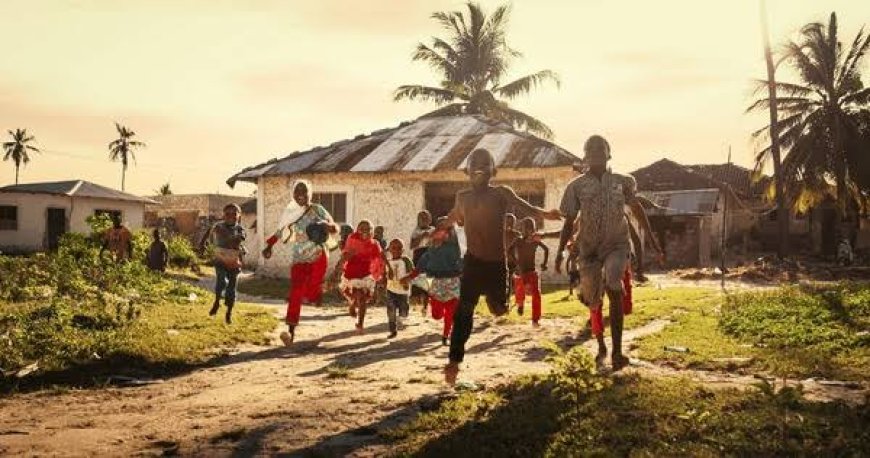
Image 5: children playing joyfully.
After closing of school children always looked forward to the games they played from the popular suwe which included the children drawing rectangular or square boxes taking turns while using a stone as an indicator to move from one box to another.
But the playful mood is always destroyed when you hear the familiar scream Up Nepa! And everyone disperses to go watch their favorite shows forgetting to do their assignments and the usual early morning rush, last minute assignments circle begins all over again but amidst all these, nothing prepares you for the shout of your name from your mother when you do something wrong or the familiar look from your mother which her child must understand and correct his/her wrong behaviour.
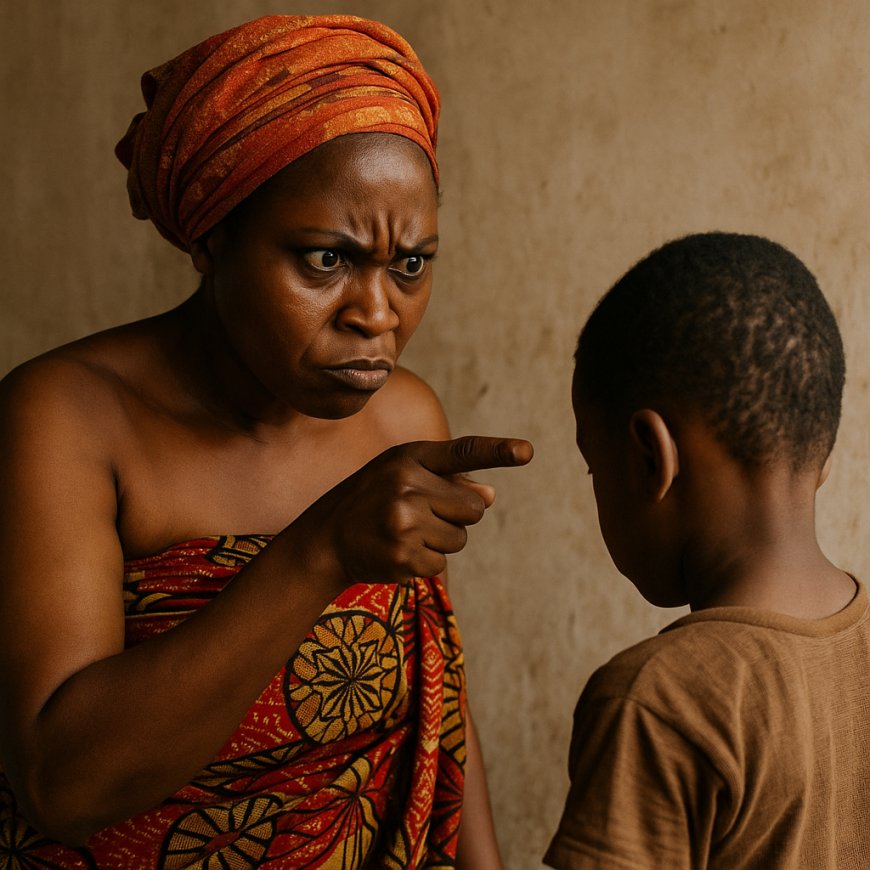
Image 6. A mother scolding her child.
Discipline is the bedrock of parenthood in this part of the world especially in Nigeria. It was a language and a simple Stare from your mother will put you in check or just the pronunciation of your name in a specific tone was enough to bring shivers down your spine especially if you are in public because you know what awaits you at home. But in all these, the love was real and it shaped us in both fear and warmth.
Aside from the voice of our parents, another voice we heard were those of the politicians with their propaganda and campaign.

Image 7: campaign propaganda in Nigeria.
Every Nigerian child has experienced the chaos that comes with Nigerian elections. The most popular parties everyone grew up with were PDP and APC Campaign noise, jingles, and small chop giveaway; the promise of scholarships to the higher institutions brought excitement to both parents and children.
We didn’t understand the politics, but the music and biscuits made it worth it. Childhood memories are tied to the chaos of democracy.
Even with the failure of the government to fulfil most of their promises parents never failed to struggle to see their children further their education.
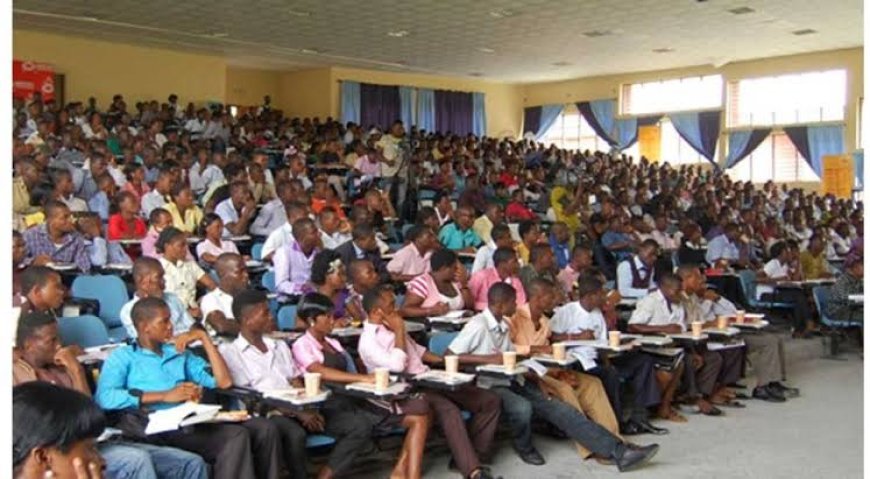
Image 8: Students receiving lectures.
The four walls of higher institutions are another area of growth, discipline and freewill. Every Nigerian child at the proper age that enters the four walls of the university enters as a novice but eventually learns to navigate their way through tough courses, tough lecturers and making new friends.
But the decisions made in these four walls have the potential to make or mar your future so discipline and resilience plays a huge role in keeping you in check despite the side attractions that have the potential to distract you from the goal which is to come out with your degree.
The feeling of pride and achievements is always contagious on the convocation day with the colourful caps and gowns

Image 9: convocation students in a Nigerian University.
The convocation day brings back a lot of nostalgia taking you down memory lane to all the sleepless nights,
the final year projects which is always a hurdle to cross on its own and even the university sends the students off into the job market with pride.
The job market is not always friendly to new graduates in Nigeria.
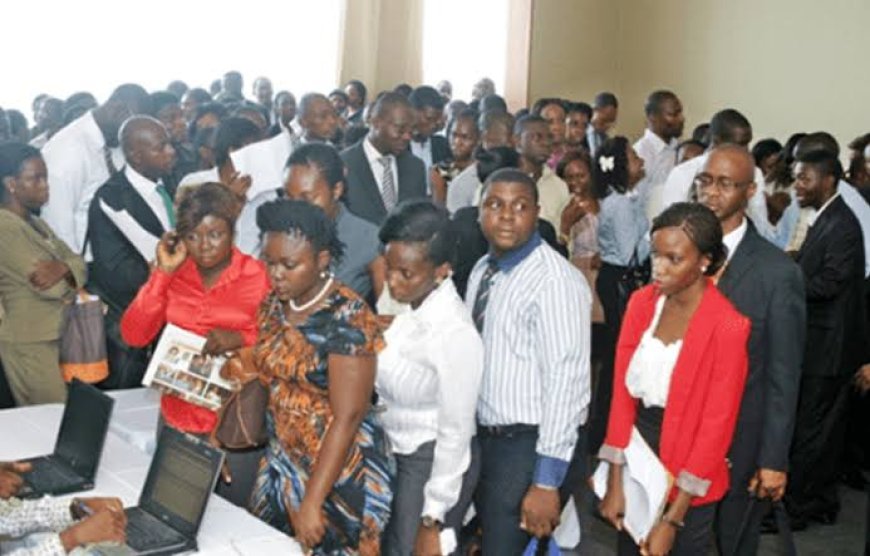
Image 10: Job hunting in Nigeria.
The early excitement of the statement Graduate fades out when reality dawns and the job hunting really begins both online and offline with company’s asking for years of experience that most graduates do not have, to the lack of adequate employment. In all this the one thing that keeps us moving is the why we started and sometimes we stop to appreciate the joy in family togetherness, prayers and encouragement.
So even with the chaos and uncertainties, we are proud Nigerians.