





















































The Harrowing of Hell
On Holy Saturday, while His body lay in the tomb, Christ descended into Sheol the waiting realm of the righteous dead. As the conquering Lord, He proclaimed redemption accomplished, broke death’s power, and led Adam, Eve, the patriarchs, and prophets into paradise. This Harrowing of Hell reveals that no part of human existence, not even death itself, lies beyond the reach of God’s saving mercy.
Prefer listening? Tap play and the article will be read aloud.
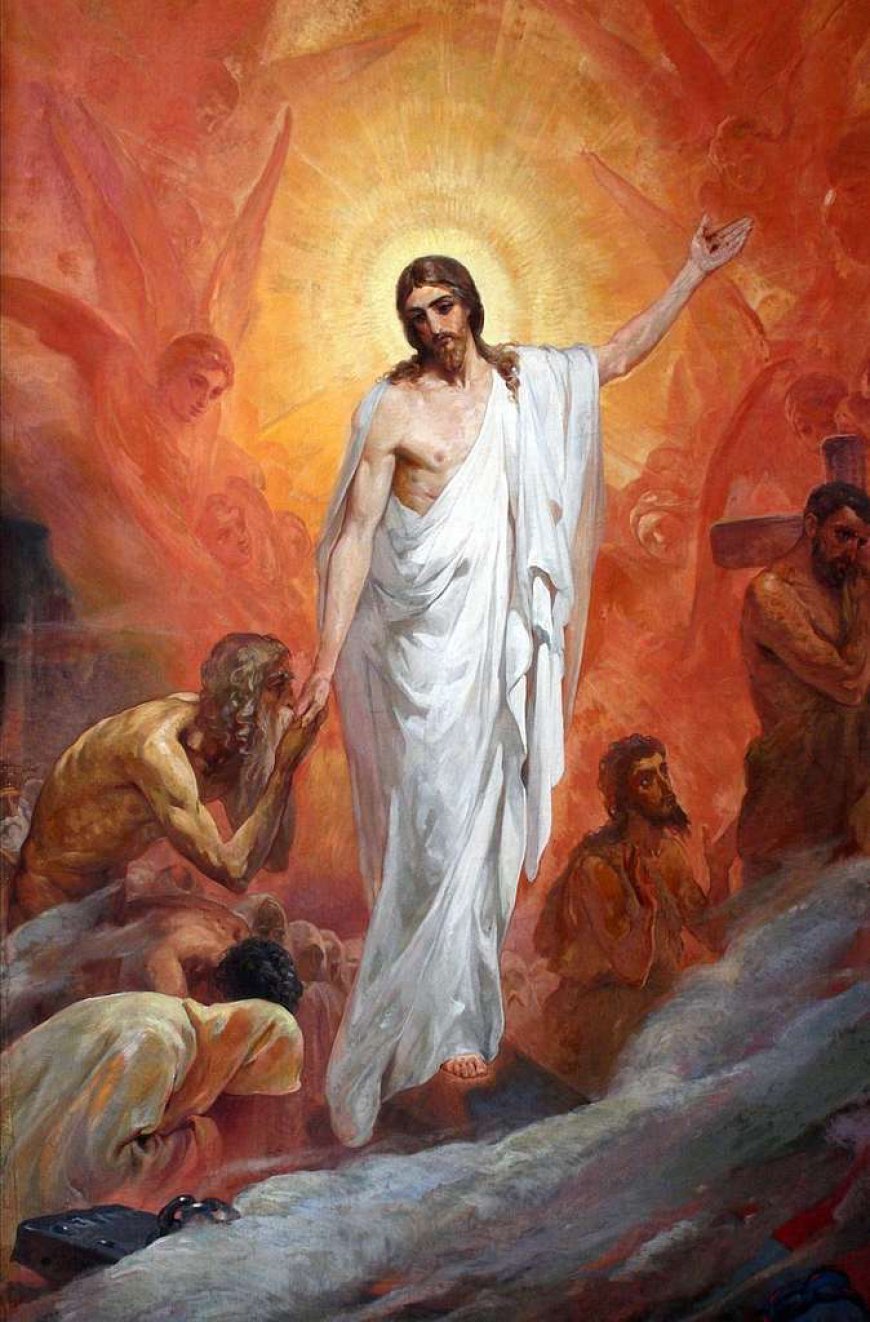
When Christians recite the Apostles’ Creed and declare that Jesus “descended into hell,” they affirm one of the most powerful truths of the faith. Far from picturing defeat or continued suffering, this mysterious event reveals the depth and completeness of Christ’s victory over sin and death. On Holy Saturday, while His body lay in the tomb, Christ’s soul entered the realm of the dead, proclaimed the success of His redemptive mission, and led the righteous of all ages into the light of paradise. This act shows that no part of human existence not even death itselflies beyond the reach of God’s saving mercy.
After His crucifixion on Good Friday, Jesus’ soul, fully united with His divine Person, descended into what Scripture calls Sheol or Hades. This was not the place of eternal punishment reserved for the finally lost. It was instead the waiting realm where all souls who died before the coming of the Messiah lived in hope, yet remained separated from the full vision of God. From Adam and Eve to the patriarchs, prophets, and just souls of every generation, they awaited the moment when heaven’s gates would open. The debt of human sin still needed to be paid in full.
Christ did not descend in weakness or as a prisoner. He came as the conquering Lord. In that hidden interval between death and resurrection, He proclaimed the accomplishment of redemption. He broke the power that held the righteous captive and led them forth beginning with Adam and Eveinto eternal paradise. This final phase of His saving work demonstrated that salvation extends across all of time. It embraces those who lived long before the Gospel was preached as well as those who hear it today. No era, no culture, and no individual stands outside the scope of His victory.
The Harrowing of Hell carries a profound realism about the human condition. Every person must one day face the finality of death. In that moment, the depths of existence become clear. Christ’s presence in the realm of the dead assures believers that divine love penetrates even these furthest limits. It opens the possibility of grace for every human heart, including those who never heard the explicit message of Christ during their earthly lives. The offer of salvation remains universal, yet it fully respects the freedom of each person. No one is saved against their will. The victorious light of the risen Lord shines into every shadow, inviting a free response of love and trust.
This mystery reveals the boundless character of God’s saving will. The grace won on the Cross is not limited by time, geography, or visible membership in the Church. It reaches into the hidden places of history and the silent longings of every soul. God desires the salvation of all and has acted decisively to make it possible. While the freedom to accept or reject remains, the power of divine mercy is greater than any barrier raised by human sin or limitation.
The event also corrects any misunderstanding of Holy Saturday. The apparent stillness of that day was never empty. While the world saw only a sealed tomb, the Lion of Judah was at work in the heart of the earth. He plundered death of its captives and opened the way to eternal life for the righteous who had waited in hope. Easter morning therefore dawns not merely as a return from the grave but as the beginning of a new creation in which death has lost its final power.
Believers today draw practical strength from this truth. Life often includes seasons of waiting, suffering, and uncertainty — moments that can feel like a personal Holy Saturday. The same victorious Christ who descended into the realm of the dead continues to accompany every human journey. Through the sacraments, especially the Eucharist, and through daily faithful living, Christians proclaim that Christ has descended, Christ has conquered, and Christ leads all who respond to His call into the fullness of life with God.
This hope is not fragile. It rests on the completed work of the Saviour. No power in heaven or on earth can overcome the victory won on the Cross and sealed in the descent into hell. The Harrowing of Hell stands as a lasting reminder that God’s redemption is total. It reaches every corner of human existence — past, present, and future — and invites every person to place their trust in the One who has already overcome the last enemy.
In a world marked by uncertainty and the reality of suffering, this ancient article of faith offers confident assurance. Christ’s descent shows that even the silence of death became the stage for His triumph. Believers can therefore face their own dark intervals with courage, knowing that the same Lord who led the righteous out of Sheol continues to lead His people toward the light of resurrection. The Harrowing of Hell is not a footnote in the story of salvation. It is a powerful declaration that Christ’s victory is complete, His mercy is universal, and His love reaches every human heart that opens to Him.
What's Your Reaction?
 Like
0
Like
0
 Dislike
0
Dislike
0
 Love
0
Love
0
 Funny
0
Funny
0
 Angry
0
Angry
0
 Sad
0
Sad
0
 Wow
0
Wow
0