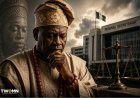

































Sowore, Barabbas, and the Psychology of Choice: When a Nation Rejects What It Needs.
Why do people reject good leadership? A deep reflection on Omoyele Sowore, Barabbas, and the psychology behind national choices.
Prefer listening? Tap play and the article will be read aloud.
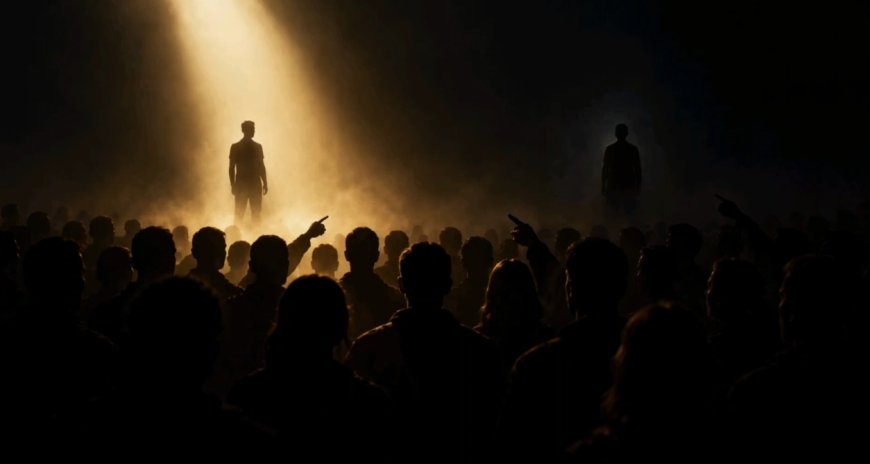
There are moments in history when the real issue is not the quality of what is presented—but the condition of the people choosing.
Elections, in theory, are about candidates. In reality, they are often about conscience, perception, and preference.
And sometimes, they reveal more about the people than the individuals on the ballot.
The Question We Avoid Asking
Why do people complain about bad leadership… Yet repeatedly choose it? It’s an uncomfortable question. But it matters. Because until it is answered honestly, nothing truly changes.
A Man Who Stepped Forward
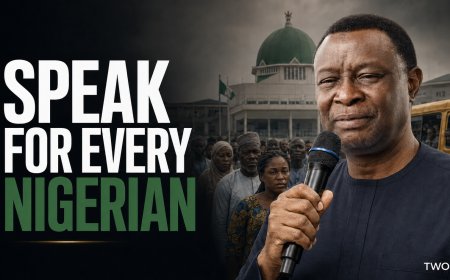
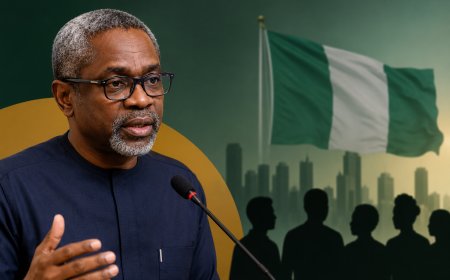
Consider Omoyele Sowore.
Strip away sentiment, bias, and political alignment. Look at the action itself.
He did what many only talk about:
- He stepped forward to lead
- He travelled across the country campaigning
- He invested time, energy, and resources
- He left behind the comfort of his family life abroad.
He didn’t just criticise the system. He entered it—willing to be judged by it.
At the very least, that demands reflection.
What Was Offered
Whether one agrees with him or not, certain things were clear:
- A reputation for speaking against corruption
- A posture of defiance against entrenched power
- A visible commitment to systemic change
In any serious society, these are not trivial qualities.
They are, in fact, the kind of traits people claim to desire in leadership.
But Then Came the Votes
And this is where the real story begins.
Because elections are not won by intention.
They are decided by people.
And people do not always choose based on:
- Integrity
- Long-term vision
- Structural reform
More often, choices are shaped by:
- Familiarity
- Immediate benefit
- Fear of uncertainty
- Deep-rooted conditioning
This is not theory. It is pattern.
An Ancient Pattern
Long before modern politics, a similar moment unfolded.
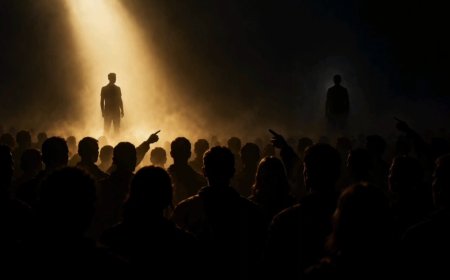
During the trial of Jesus Christ, a choice was presented to the crowd:
Release Jesus—or release Barabbas.
Barabbas was not described as a reformer.
Yet the crowd made its decision.
Release Barabbas.
Crucify Jesus.
It remains one of the most revealing decisions in human history—not because of who was chosen, but because of how the choice was made.
Not Ignorance—But Preference
It is easy to assume people choose wrongly because they do not know better.
But history suggests something more complex.
Sometimes, people know.
They simply prefer differently.
Because what is right is not always what is comfortable.
And what is necessary is not always what is popular.
The Cost of Choosing the Familiar
When a system has been broken for long enough, it begins to feel normal.
And anything that threatens to disrupt it—even for good—can feel dangerous.
So people retreat to what they know:
- Known names
- Established structures
- Familiar outcomes
Even when those outcomes have consistently failed them.
The Misplaced Blame
In moments like this, blame is often directed at the candidate:
- “He didn’t win.”
- “He wasn’t popular enough.”
- “He failed.”
But that explanation is incomplete.
Because democracy is not just about who runs. It is about who chooses.
And when choices consistently produce the same results, the conversation must shift from individuals to collective decision-making.
Light Does Not Dim Because It Is Rejected
History offers a quiet but powerful truth.
The rejection of Jesus Christ did not diminish Him.
It did not invalidate His message.
It did not erase what He represented.
It revealed something about the people.
In the same way, the rejection of any idea, value, or candidate does not reduce its worth.
Integrity remains integrity.
Truth remains truth.
Courage remains courage.
Even when they are outvoted.
RELATED: The Prince of Persia: Unseen Forces Behind Power (Daniel 10 Explained)
A Nation and Its Reflection
So perhaps the real question is not:
“Why didn’t Sowore win?”
But:
What do our choices say about what we truly value?
Because until that question is answered honestly, outcomes will continue to reflect the same patterns.
Conclusion: Beyond Mockery
It is easy to mock what does not win.
It is harder to examine why.
But if democracy is to mean anything, it must go beyond participation.
It must include reflection.
Because in the end, the story is rarely about one man.
It is about a people—and what they consistently choose when given the opportunity.
💬 What do you think?
Are leadership outcomes purely about candidates—or do they reflect deeper patterns in how people think and choose?
What's Your Reaction?
 Like
0
Like
0
 Dislike
0
Dislike
0
 Love
1
Love
1
 Funny
0
Funny
0
 Angry
0
Angry
0
 Sad
0
Sad
0
 Wow
0
Wow
0