














The Impact of Social Media Tweets, Memes, and Skits in Portraying Nigeria’s Political Reality
Explore how tweets, memes, skits, influencers, and viral social media content are reshaping political awareness, public opinion, and political manipulation in Nigeria’s digital age.
Prefer listening? Tap play and the article will be read aloud.
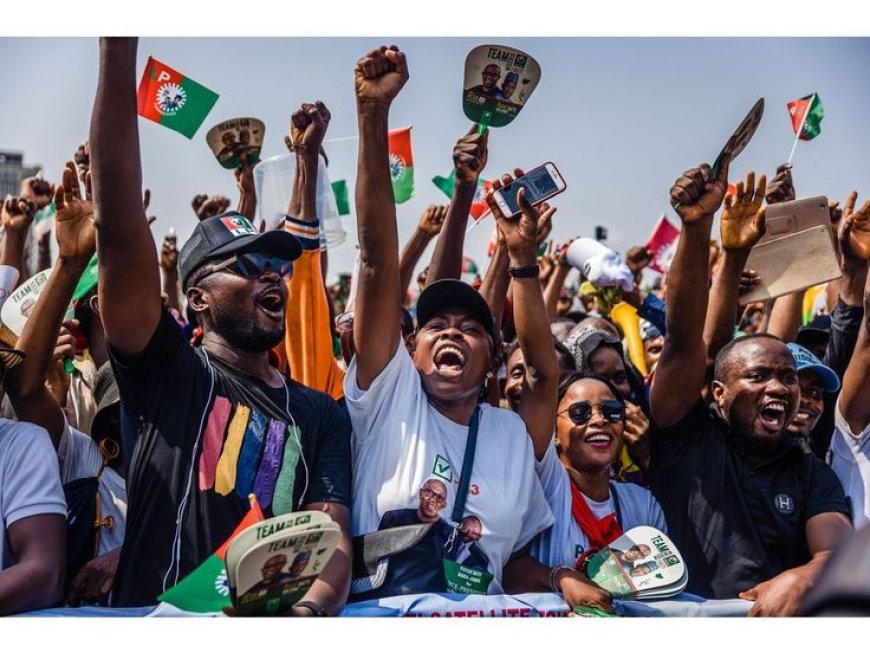
In Nigeria today, political conversations rarely begin in a rally ground or a newspaper headline. They start as a tweet that goes viral overnight, a meme that spreads faster than official statements, or a skit that turns a serious national issue into something everyone is laughing about on TikTok.

Somewhere in that mix of humour, outrage, and constant scrolling, politics has changed shape.
It is no longer just something people follow. It is something people consume; in fragments, in emotions, and in short bursts that disappear as quickly as they appear.
And that raises a difficult question: Are Nigerians becoming more politically aware, or just more exposed to political noise that feels like awareness?
Fun fact: Nigeria’s New Public Square Is now Online
Social media is no longer a side space in Nigeria’s political life. It is the main stage.

Estimates suggest that tens of millions of Nigerians are active on social media, and for many people, it is now the primary source of news. A 2023 Reuters Institute for the Study of Journalism survey highlights this shift clearly: while only 57% of Nigerians say they trust news media, and just 38% believe the media is free from political influence.
More importantly, the way people consume information has changed, Around 93% rely on online media for news. Also, about 78% rely specifically on social media as their main source, compared to 58% who still use TV, while only 28% still rely on print media.

What this shows is simple: social media is no longer a novelty. It is the new public square. A place where opinions are formed, challenged, and reshaped in real time.
But unlike a physical town square, this one is controlled by algorithms, attention spans, and whoever knows how to go viral.
Tweets: Where Politics Happens in Real Time
On platforms like X (formerly Twitter), political reality moves at the speed of reaction.A single tweet can spark nationwide debate before facts are even confirmed. Hashtags trend, counter-narratives emerge, and within hours, an entire political moment can be created or destroyed.
However, speed has a cost. In trying to keep up, nuance often disappears. Complex issues are reduced into sides. People are forced to choose quickly- agree, disagree, retweet, or move on. And in that environment, perception often arrives before truth.
Memes: When Politics Becomes a Joke You Can’t Ignore
Memes are one of the most powerful political tools in Nigeria today; not because they are always accurate, but because they are easy to feel.
A meme can take a complicated political issue and turn it into a single image that makes people laugh, nod, or get angry. That emotional reaction is what makes it stick.

But memes also carry a hidden tension. When everything becomes a joke, even serious political realities start to feel lighter than they are. People begin to understand politics through humour rather than depth. And sometimes, what is funny becomes what is believed.
Skits: Entertainment That Feels Like Truth
Nigerian skit culture has blurred the line between entertainment and political commentary.
Creators now regularly turn issues like corruption, insecurity, and economic hardship into short comedic scenes that feel real because they are familiar. They reflect everyday struggles in a way news reports often cannot.

This also raises a quiet concern - when politics is consistently delivered as comedy, does it still register as something serious?
For many viewers, skits are more engaging than political speeches. More relatable than news reports. More shareable than analysis. And that means they shape perception, not just of events, but of leaders, institutions, and entire political systems.
The Illusion of Awareness
This is where the deeper issue begins. False or simplified political content does not always make people less informed, instead, it often creates the feeling of being informed.
People see tweets, memes, and skits every day. They feel updated, aware, involved in national conversations. But that awareness is often fragmented, built from emotional reactions rather than structured understanding.
In practice, this means many Nigerians are not disconnected from politics. They are constantly surrounded by it. But what they are seeing is often filtered, edited, and emotionally framed.
Influencers as New Political Power Brokers
In the past, political influence was shaped by traditional media, party structures, town halls, and public rallies. Today, influence is increasingly digital.

An Instagram creator or TikTok influencer with millions of followers can shape how people perceive politicians more than official campaign messages. Political attention is no longer only about authority, it is about reach.
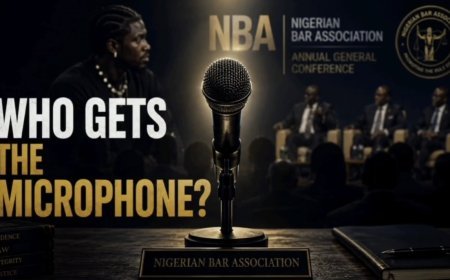
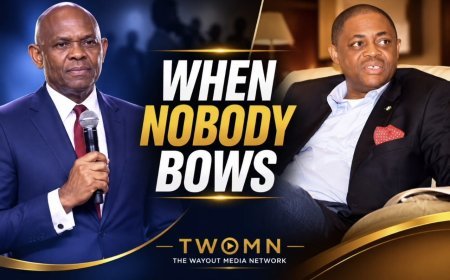
Even live digital conversations have become political spaces. Online “spaces” and live discussions now function like modern town halls, attracting large audiences across Nigeria and the diaspora. But unlike physical debates, these digital spaces are not always as open as they appear.
Some are carefully moderated. Some are strategically structured. And in certain cases, conversations are shaped; subtly or directly by political interests who understand a simple rule: in an attention economy, controlling the narrative matters more than controlling the stage.
What looks like open discussion can sometimes be curated persuasion.
The Cycle of Viral Politics: X Spaces and TikTok
One of the clearest examples of this new ecosystem is the relationship between X Spaces and TikTok.
X Spaces often become where political conversations happen in raw form: debates, disagreements, emotional exchanges, and unfiltered opinions.

Those moments however, do not stay there, they are clipped, edited, and repackaged into short TikTok videos with music, captions, and selective framing. A serious debate becomes entertainment, a heated exchange becomes a viral moment, and a complex argument becomes a 30-second narrative. Then the cycle continues.
TikTok spreads it further. Influencers comment on it. Memes are created. And soon, what started as a fragmented conversation becomes widely accepted ‘public opinion.’
The pattern is simple: conversation → clip → emotion → virality → belief
And at each stage, something is added and something is lost
What Nigerians Actually Experience Online
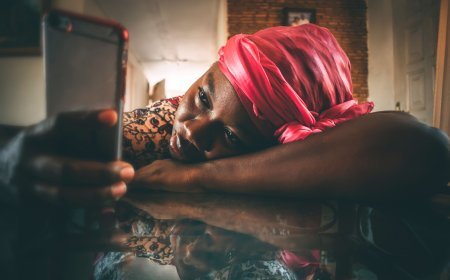
Nigerians today are constantly exposed to political content online, especially through platforms like X, TikTok, and Instagram. Political discussions now appear alongside entertainment, making social media the primary space where many people interact with politics daily.
Survey responses showed that people engage more with political content when it is entertaining, emotional, or humorous. Memes, skits, and satire make political issues easier to consume and more relatable, but they can also reduce complex issues into simplified narratives.
Interestingly, many respondents acknowledged that political actors use social media to manipulate public opinion, yet they still engage with the same content. Trust is often influenced by who posted the information, how viral it is, or whether it “sounds true,” rather than careful verification.
This reveals a growing contradiction in Nigeria’s digital political culture: people feel politically informed because they are constantly exposed to political conversations online, but that exposure does not always lead to deep understanding. In many cases, emotional and highly shareable content spreads faster than balanced analysis, shaping public perception in powerful ways.
Elections in the Age of Attention
As elections approach, this environment becomes even more significant.

Political influence is no longer only about manifestos or televised debates. It is about viral moments; clips that travel faster than fact-checks, jokes that outlive clarifications, and narratives that spread before institutions can respond.
This does not mean Nigerians are uninformed. It means they are often informed in ways that are incomplete, emotional, and shaped by digital performance. And in that space, perception becomes a form of power.
Conclusion: Awareness or Illusion?
Social media has changed Nigerian politics permanently. It has made political engagement more accessible, more immediate, and more participatory than ever before. But it has also changed what it means to be politically aware.
Tweets accelerate opinions. Memes simplify reality. Skits dramatize governance. Influencers shape perception. And digital spaces turn conversation into content that can be endlessly reshaped.The result is a political environment where people are constantly exposed to information but not always grounded in understanding.
So the question remains: As Nigeria moves into future elections, will citizens be able to separate political reality from viral performance—or has politics already become inseparable from digital entertainment?
What's Your Reaction?
 Like
0
Like
0
 Dislike
0
Dislike
0
 Love
0
Love
0
 Funny
0
Funny
0
 Angry
0
Angry
0
 Sad
0
Sad
0
 Wow
0
Wow
0