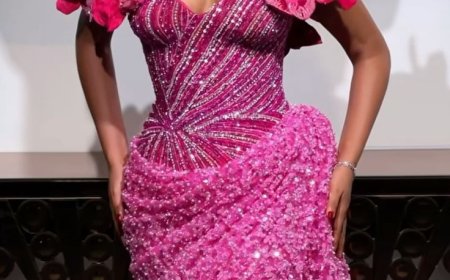
THE ERA OF ALTE DRESSING; SELF-EXPRESSION THROUGH FASHION
This article examines the relationship between culture and fashion, with a particular focus on the emergence of Alternative (Alte) dressing in Nigeria as a form of self-expression. It traces how fashion, once strongly regulated by culture and tradition, has evolved through globalization and technological advancement into a more individualistic and expressive medium. The discussion highlights how traditional Nigerian attires such as aso-oke, isiagu, and baban riga, once served as clear markers of cultural identity, but have increasingly given way to mixed and hybrid styles.
 Abisolami


Culture, as it is defined, is a way of life of people, and in this context, it has been defined that every society has a way of life that they use to express its culture. This way of life spans from language to dressing, music, and many more. Dressing defines the fashion sense of a society, their way of life, lifestyle, and identity. For example, you can easily identify a Yoruba woman just because they dress in Aso-Oke because they are identified with it.
The world of fashion evolves throughout the generations from one fashion style to another, and at every phase, the culture is not left untouched because fashion can’t be separated from culture. In the ancient days, we had dressing regulated by culture and tradition, more collective than individualistic. The evolution of fashion is not in the absence of technology. The rise in globalisation and technology has brought rapid revolution in the fashion industry over time.
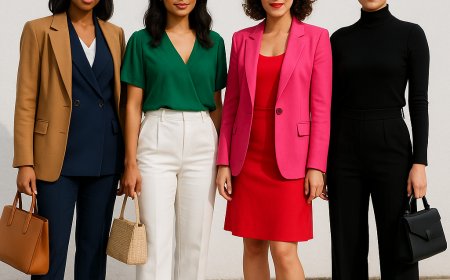
The focus has shifted from representing culture to having a fashion sense. This movement leads from the use of local styles in which the tribe is known, such as ‘aso-oke’ in Yoruba, the ‘isiagu’ in Igbo, and the use of ‘kaftan’ or ‘baban riga’ in Hausa. Today, we find it difficult to differentiate between cultures because people across the region are wearing mixed clothes, especially in Yoruba land, where the use of Kaftan is now the order of the day.
Alte dressing, a short form of the word ‘Alternative’, also evolved among all other fashion senses, which is now common among students on campus today. It is a common mode of dressing among the youths that encourages and signifies freedom and unapologetic expression of oneself. The Alte dressing, which could be traced back to the 2010s, is a blend of vintage, street-wear, with a fashion sense and aesthetic spirit. Beyond fashion, alternative dressing is a movement of attitude, lifestyle, and identity. How has Alte dressing given room for self-expression?
ALTERNATIVE DRESSING
The word ‘alte’ emerged in the mid-2010s. It began as an aesthetic trend tied to experimental music and DIY fashion. The word started to trend when musical artists broke from the mainstream of afrobeats in the mid-2010s.
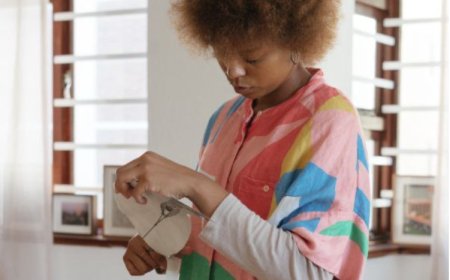
The likes of Lady Donli, Santi, Amaarae, and BOJ, who blended genres like neo-soul, psychedelic pop, and trap with fashion that was literally nonconforming, thrifted layering and challenging. Alte dressing is characterised by oversized fits, retro pieces, vintage with accessories of glasses, chains, and piercings.
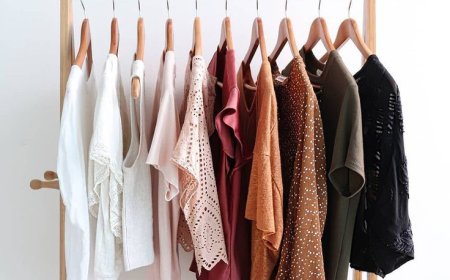
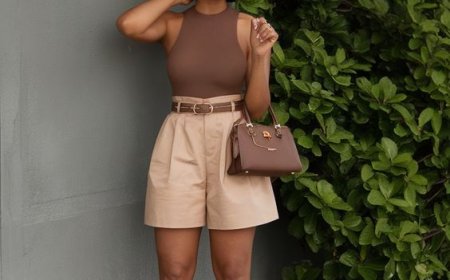
Alte dressing always comes in bold and clashing styles. The style is always nonconforming as it does not follow a particular fashion pattern; anyone could just wake up and combine clothes together. There is no rule of thumb regarding the pattern of the dressing. It is a dressing inspired by the 90s retro fashion, punk and grunge culture, afro-fashion and artistic subcultures, and its strength lies in individual creativity rather than trends. It is a mix of old-fashioned dressing and modern dressing. A combination of the two dressings, mixing up dressings that come uniquely and make you stand out.
ALTE DRESSING AS A FORM OF SELF-EXPRESSION
Individualism

Alternative dressing brings about the vibes of individualism, where people feel they can stand out and do things the way they want to. This fashion style does not follow a pattern but gives room for creativity, where you can come up with your own mode of dressing. This alte dressing is a means to reflect personality, self-style, and personal taste. It overrules the ‘blend in’, it is a unique pattern that is identified with an individual, and it is an identity, a style that an individual can be identified with. For example, when Alte is mentioned, there are individuals who come to mind either in fashion or in music style. Meanwhile, Alte dressing is still ‘a copy and paste’, every individual creates their own style, but it is a kind of fashion that is known among youths.
Non-conformity

Also, the nonconformity characteristic of Alte dressing. One of the expressions that this fashion gives is rejection of the regular, the mainstream. Alternative dressing does not resonate with the regular culture, it is a vibe of its own that does not conform to how things are done, especially against the social norms in Nigeria, and that’s why there has been this stereotype around the dressing, likewise criticism. It is a symbol against the norms, and a lifestyle that indeed deviates from uniformity, and some cultural expectations. For example, culturally, there are modes of dressing that are expected for some occasions; in Alte dressing, there is no such conformity; your mode of dressing is your style.
Creativity

Furthermore, the big picture is that Alte encourages creativity. There is no rule around fashion, it could be mysterious, something that just pops up in your head, and you carry it out. An alte fashionista can be likened to a designer, one who can imagine and combine different accessories and execute them. Fashion accessories are like canva to them and their body is the template for the design. From DIY styling to unconventional combinations, and thrift hacks, they possess artistic freedom. This creativity gives room for the expression of oneself from thoughts to skills.
Ancient-Modern Fashion

Alte is indeed a representation of Ancient-modern fashion; the Alte dress is not totally undefined. It is a blend of the ancient and modern fashion where individuals integrate historic Nigerian fabrics into modern dress. It also reflects the look from the 90s with modern spikes, mixing Nigerian aesthetics with modern elements. An example would be wearing sneakers on ‘Iro and Buba’ or wearing beaded jewellery on a crochet top with an ‘adire’ wrapper, which naturally might seem weird but is allowed in Alte fashion. Though this has helped maintain the existence of ancient fashion in today’s world, reclaiming African creativity globally but culturally, mixing traditional clothing with Western wear is a no-no.
Conclusion
This fashion has given room for self-expression in various ways, and it could be termed rebellious, nonconforming, individualistic, and creative. The fashion is still termed as weird, overly western, and stereotypical, and there has been criticism around it as well. Though the fashion gives room for creativity, its extremity can’t be overlooked as well, especially its genderless expression where male or female can come up with different styles that might not identify with their gender. Despite all these criticisms and challenges of Alte dressing, it has become a movement that is influencing mainstream fashion today.
It is the trend!