
















































Saint or Sinner: How Winnie Was Swallowed
A powerful re-examination of Winnie Madikizela-Mandela’s legacy that challenges the neat narrative of South African liberation. The piece argues that while Nelson Mandela was isolated on Robben Island, Winnie was left on the frontlines to endure decades of brutal apartheid psychological warfare, exile, and torture. It contextualizes her most controversial chapters within a literal war zone and frames her tragic divorce as the final success of the regime's targeted smear campaigns, honoring her a

Prefer listening? Tap play and the article will be read aloud.
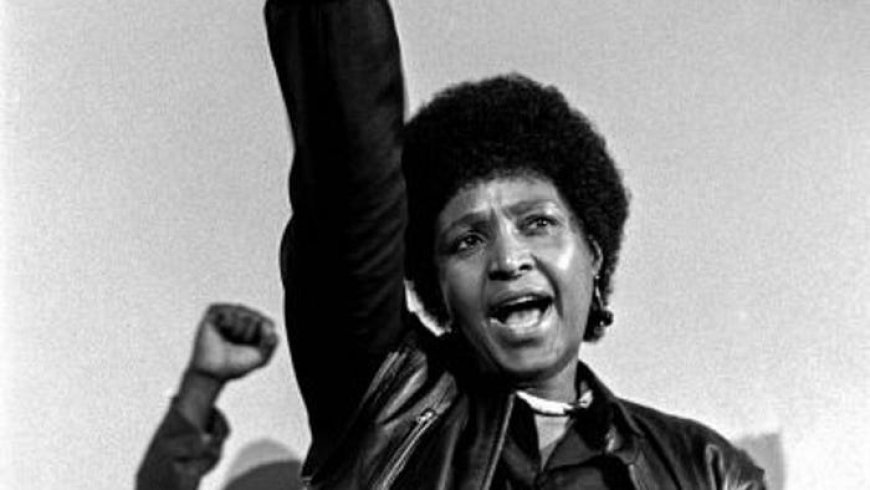

Source: South African History Online
There is a version of this story you already know.
A man walks out of prison after 27 years. He raises his fist. The world weeps. He becomes president. He wins a Nobel Peace Prize. He dies beloved, draped in every flag that ever claimed to care about justice. His name becomes a synonym for grace.
You know that story.
Now let me tell you about the woman who was left behind to bleed.
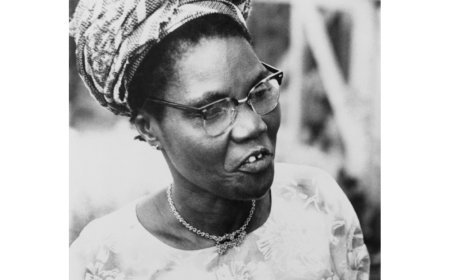
Long before she became a political symbol, Nomzamo Winifred Zanyiwe Madikizela was a force in her own right. Born in the Transkei in 1936, her father named her Nomzamo—she who strives. By her mid-twenties, as the first Black medical social worker at Baragwanath Hospital, she was brilliant, formally trained, and already more dangerous to the apartheid state than men twice her age. Then, in 1958, she married Nelson Mandela. She was 22; he was 40 and already the embodiment of the liberation movement.
They were given just about 700 days together as husband and wife before he went underground, and then to Robben Island. Nelson was sent to a cell. Winnie was left on the streets, and the regime quickly realized that a man behind bars is far easier to contain than a fierce, unbroken woman outside them.
The Trials of Winnie Mandela

Source: The Trials of Winnie Mandela Thumbnail
While the walls of Robben Island inadvertently safeguarded Nelson from the daily, chaotic terror of the regime, Winnie’s life became a brutal, ongoing psychological battlefield. The deep trauma of this lived reality is laid bare in the documentary The Trials of Winnie Mandela (now streaming on Netflix, produced by her granddaughters, Princess Zaziwe Manaway and Princess Swati Mandela-Dlamini). Through their lens, we see a woman subjected to an isolation designed to snap her mind.
In 1969, the state threw her into solitary confinement for 491 days. When that didn't break her, they banned her. For years, she couldn't be in a room with more than one person at a time, and her words were illegal to quote. The state subjected her to a quiet, agonizing cruelty, constantly raiding her home and eventually tearing her daughters, Zenani and Zindzi, away to a boarding school in Swaziland.
When all else failed, the regime tried to turn her into a ghost by exiling her to Brandfort, a conservative, Afrikaans-speaking wasteland hundreds of miles from home. They put her in a matchbox house with no running water or electricity, surrounded by neighbors who had been told she was a dangerous communist witch. But "she who strives" refused to fade. Winnie built a clinic, started a crèche, learned Sotho to communicate with her neighbors, and planted vegetables to feed them. Every time the security forces burned her progress to the ground, she rebuilt it from the ashes.
The Darkness of the War Zone
But a person can only walk through a furnace for so long before they catch fire.
The documentary doesn't shy away from the darkest chapters of her legacy, including the chaos surrounding the Mandela United Football Club and the tragic death of young Stompie Moeketsi. But it finally situates that darkness within the context of a literal war zone.
The apartheid state didn't just fight Winnie in the streets; they deployed paid assassins, specialized psychological operatives, and informants to infiltrate her inner circle, gaslight her, and dismantle her sanity from the inside out. Winnie wasn't living a clean, curated saint’s life story; she was navigating a survivor's raw nightmare.
Cost of the Victory
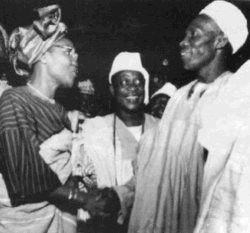
The ultimate tragedy of this state-sponsored psychological warfare was that it didn't just damage her reputation, it poisoned her marriage. By the time February 1990 arrived, the world saw a flawless victory. In those iconic photographs, Nelson walks free, hand-in-hand with a radiant Winnie. She had waited, fought, and bled for that exact moment.
Yet behind the smiles, the state’s long-term plan had succeeded: the gap between the couple had become a chasm. Decades of forced separation, coupled with the regime's relentless, targeted smear campaigns whispering rumors of radicalism and infidelity into Nelson's ear, had done their damage.
The tragic reality is that the man she had sacrificed everything for returned home a stranger to her struggle. Within two years they separated, by 1996 they divorced. Winnie was pushed aside by the very movement she had kept alive, abandoned by the man whose name she had carried through thirty years of darkness, left to watch him choose a softer, safer life with someone else.
South Africa’s Living Conscience
Even when it became uncomfortable to be on her side, Mama Winnie remained the country's living conscience. When the new "Rainbow Nation" became too preoccupied with political celebrations to notice the poor and the HIV-positive, she stood with the forgotten. In a new government that valued diplomatic politeness over structural change, she remained a beautifully disruptive force, constantly reminding the elite that those who had suffered the most had still received the least.
When she passed away on April 2, 2018, at the age of 81, she left behind a legacy that refuses to be neatly categorized. Winnie Mandela was never a saint, and she shouldn't have had to be. She was a human being who chose to keep going when every rational reason to stop had been handed to her. She held the line alone, largely without credit, under conditions designed to destroy her.
The world remembers the man who walked out of the prison gates, but we must never forget the woman who kept the gates from locking forever.
What's Your Reaction?
 Like
0
Like
0
 Dislike
0
Dislike
0
 Love
0
Love
0
 Funny
0
Funny
0
 Angry
0
Angry
0
 Sad
0
Sad
0
 Wow
0
Wow
0