

































WHEN SNAKES REFUSE TO MOVE TOGETHER: NIGERIA’S TRAGEDY OF ISOLATED SUFFERING
Using a Yoruba proverb as a metaphor, this opinion article examines how Nigerians face insecurity, inflation, police brutality, bad roads, poor healthcare, electricity failure and bad governance in isolation instead of demanding accountability together.
Prefer listening? Tap play and the article will be read aloud.
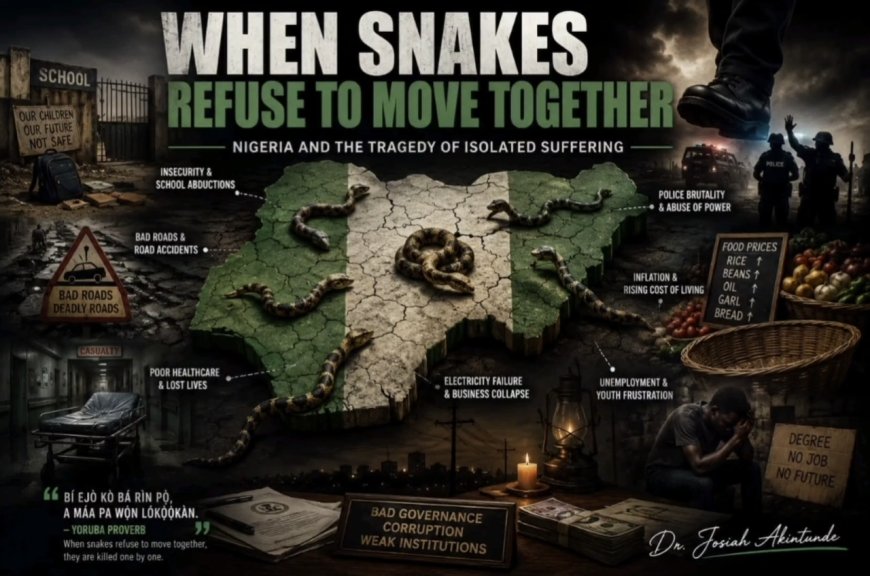
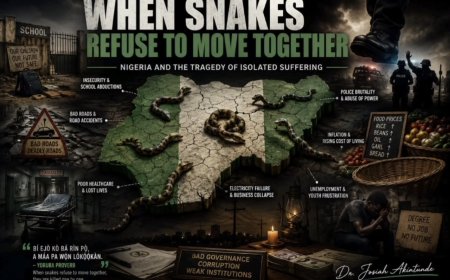
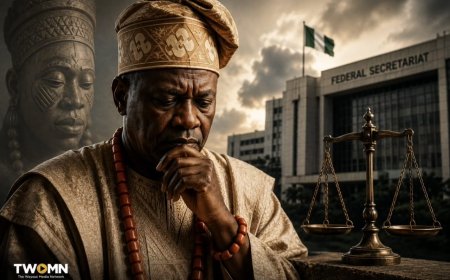
A Yoruba proverb warns that when snakes refuse to move together, they are killed one by one. In Nigeria, insecurity, inflation, police brutality, bad roads, poor healthcare, electricity failure and bad governance continue to consume citizens because national suffering is too often treated as private misfortune.
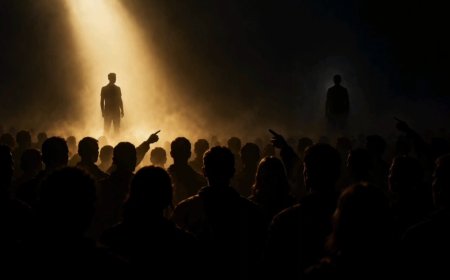
The Yoruba say, “Bí ejò kò bá rìn pọ̀, a máa pa wọ́n lọ́kọ̀ọ̀kan” — when snakes refuse to move together, they are killed one by one. It is a proverb about unity, survival and the danger of isolation. Even a feared creature becomes vulnerable when it moves alone. A snake on its own can be hunted, cornered and killed. But snakes moving together command caution.
Nigeria today is living inside the warning of this proverb. The country is not short of pain. What it lacks is collective outrage strong enough to confront the systems producing that pain. Nigerians are suffering, but too often, they suffer separately. A tragedy happens in one community, and the rest of the country watches from a distance. A family loses a child, a teacher, a traveller, a patient or a breadwinner — and the nation moves on.
This is how national failure becomes private grief. When bandits attack one village, others thank God it is not their town. When kidnappers invade one school, parents elsewhere panic briefly, then return to routine. When bad roads kill travellers, only the bereaved families carry the weight. When hospitals fail patients, relatives mourn quietly. When police brutality claims a life, outrage rises only if the victim’s story becomes viral enough to trend.
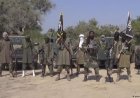
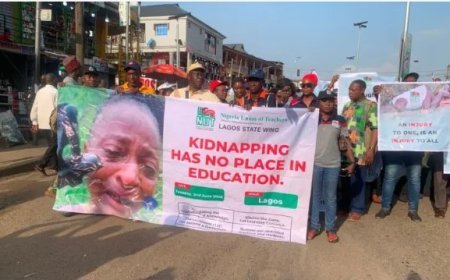
The recent school abduction in Oyo State is a painful example. Reports indicated that gunmen attacked schools in the Oriire area of Oyo State, while separate attacks in Borno and Oyo left more than 80 children missing. Children went to school — a place that should represent safety, hope and the future — and were thrown into terror. Families were left in agony.
Even more disturbing were reports surrounding the killing of an abducted teacher. Channels Television reported that the Oyo State Police Command was reviewing a viral video allegedly showing the beheading of one of the abducted teachers. For accuracy and fairness, the beheading claim should be treated as an allegation under police review, even though the killing of an abducted teacher had been reported.
Yet, after the initial shock, what followed? A few statements. Social media anger. Condemnations. Prayers. Hashtags. Then calmness. Not the calmness of peace, but the calmness of a people who have become dangerously used to tragedy. Where was the sustained national pressure? Where was the united demand that no Nigerian child should be kidnapped from school? Where was the collective insistence that teachers must not become sacrificial victims of insecurity?
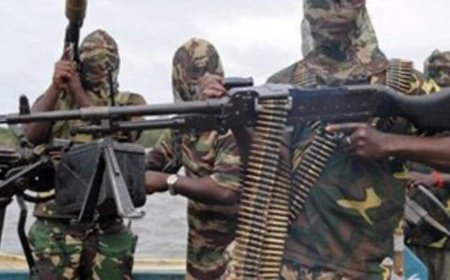
For years, many Nigerians treated terrorism and banditry as a northern problem. Then it became a rural problem. Then a highway problem. Then a school problem. Then a church and mosque problem. Now, it is a national problem. Evil does not remain where society first tolerates it. It expands. It studies weakness. It notices when outrage is temporary. It understands when citizens are divided by ethnicity, religion, class and politics.
The same pattern appears on Nigeria’s roads. Bad roads have become silent graveyards. People die not only because of reckless driving, but because of failed infrastructure: deep potholes, abandoned highways, poor drainage, weak enforcement, delayed emergency response and years of government neglect. The Federal Road Safety Corps reported that 5,421 people died in road crashes across Nigeria in 2024, while the National Bureau of Statistics published Road Transport Data Q1 2024 showing the continuing scale of road traffic crashes.
After each accident, the pattern is familiar. Families mourn. Newspapers report the number of dead. Officials express sadness. Promises are made. Then silence returns until the next accident. But bad roads are not natural disasters. They are governance failures. Every pothole that kills is not just a hole in the road. It is a hole in leadership, accountability and public conscience.
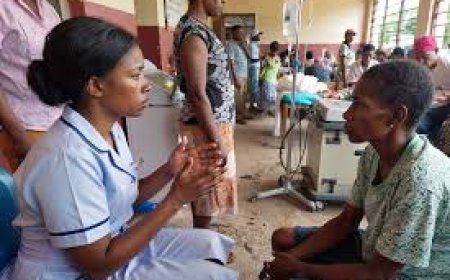
The healthcare system tells the same story. In many Nigerian hospitals, survival can depend on money, connections, timing and luck. Patients are asked to buy gloves, syringes, drugs and basic supplies. Emergency cases are delayed because deposits must be paid. Doctors and nurses are overworked. Equipment is unavailable, broken or inaccessible. When a patient dies because oxygen was unavailable, the family cries alone. When a pregnant woman dies because emergency care failed, her children inherit the loss. When a poor man dies because he could not afford treatment, society calls it “God’s will” and moves on.
But how many deaths are truly God’s will, and how many are the result of public failure? A nation that refuses to collectively demand functional hospitals will continue to lose citizens one ward, one emergency room and one family at a time.
Police brutality is another wound that exposes Nigeria’s selective outrage. Citizens have faced unlawful arrests, extortion, harassment, torture and extrajudicial killings. The #EndSARS movement showed what collective anger could achieve when young Nigerians stood together to demand dignity and accountability. Amnesty International reported that Nigerian security forces killed at least 12 people at Lekki toll gate and Alausa on 20 October 2020, and later stated that victims of police brutality had still not received justice one year after the protests.
But after the protests, many old habits returned. Victims still emerge. Families still cry. Officers accused of abuse are sometimes protected, transferred or quietly absorbed back into the system. The painful truth is that many Nigerians only become fully angry when the victim looks like them, speaks like them, worships like them, or belongs to their social class. But injustice does not need tribal permission before it spreads.
Inflation has also turned ordinary living into daily warfare. Food prices rise. Transport costs rise. Rent rises. School fees rise. Electricity tariffs rise. Medication rises. Yet salaries remain stagnant, businesses struggle, and families quietly reduce their standard of living. Nigeria’s headline inflation rose to 15.69% in April 2026, according to figures reported from the National Bureau of Statistics.
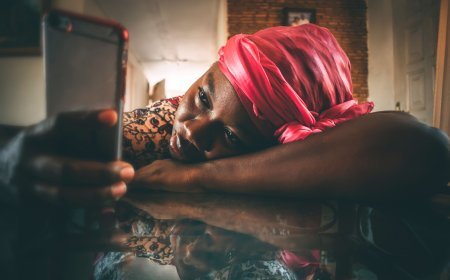
Nigerians are adapting with painful creativity. People skip meals. Parents withdraw children from better schools. Workers trek longer distances. Families borrow to survive. Small businesses increase prices and lose customers. Many people are working harder but living poorer. Everyone complains, but few organise. Everyone is angry, but anger is scattered. Everyone is affected, but the response remains individual.
Electricity failure is perhaps one of the clearest examples of citizens adapting to failure instead of confronting it. For decades, Nigerians have built personal solutions to a national problem: generators, inverters, solar panels, rechargeable lamps, power banks and fuel storage. The World Bank has noted that 85 million Nigerians do not have access to grid electricity, representing 43% of the country’s population. It also describes the DARES programme as a $750 million initiative expected to provide new or improved electricity access to over 17.5 million Nigerians.
The rich buy their way out of darkness. The poor sit inside it. Businesses collapse because they cannot afford diesel. Tailors, welders, barbers, printers, cold-room operators, restaurants and small manufacturers struggle daily. Students read under poor lighting. Hospitals depend on backup power. Families sleep in heat. Yet electricity failure is treated as normal. Nigerians ask, “Is there light?” as if electricity is a miracle, not a basic public service.
Nigeria’s youth are also trapped in this cycle of isolated suffering. They are often blamed for restlessness, migration, cybercrime, political anger or social rebellion. But what future has the country offered them? Many graduates spend years without jobs. Skilled young people are underpaid. Entrepreneurs are crushed by poor power supply, taxes, insecurity, inflation and weak infrastructure. Those who can leave the country leave. Those who remain are told to be patient. But patience without justice becomes oppression.
At the root of many of these problems is corruption — not only the corruption of stolen money, but the corruption of institutions, values and accountability. When funds meant for roads disappear, people die. When money meant for hospitals is diverted, patients die. When security budgets are mismanaged, communities are exposed. When education funds are wasted, children inherit poor learning conditions. When elections are compromised, bad leaders remain in power.
Corruption is not abstract. It has blood, hunger, tears and funerals attached to it. Yet Nigerians often treat corruption like political entertainment. We discuss scandals, laugh at public drama, defend thieves from our ethnic or religious group, and condemn only the corruption of our opponents. This selective morality is one of the reasons Nigeria remains trapped.
Perhaps one of the most dangerous attitudes in Nigeria is: “It does not concern me.” That phrase has weakened national conscience. It has made victims lonely. It has allowed injustice to grow. It has taught leaders that citizens can be divided, distracted and exhausted. It has made public suffering look like private misfortune.
But everything concerns everyone. Insecurity concerns the trader in Lagos. Bad roads concern the student in Enugu. Poor healthcare concerns the farmer in Benue. Police brutality concerns the banker in Abuja. Inflation concerns the pastor, imam, teacher, driver, nurse, journalist, civil servant and market woman. No Nigerian is truly safe in a failing system. Some are only temporarily untouched.
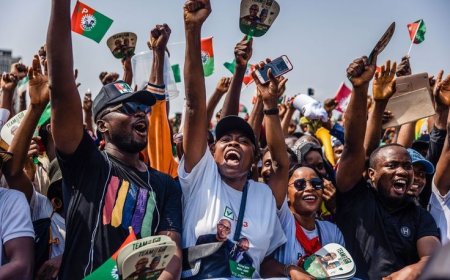
The question is no longer whether Nigerians are suffering. The question is: when will Nigerians start responding as one people? This does not mean violence. It means organised civic responsibility. It means sustained public pressure. It means refusing to forget victims after the headlines fade. It means demanding accountability beyond hashtags. It means professional bodies, religious institutions, student unions, labour groups, market associations, traditional leaders, civil society organisations and ordinary citizens speaking with one voice.
When a child is kidnapped, the child is Nigerian. When a teacher is killed, the teacher is Nigerian. When a patient dies in a failed hospital, the patient is Nigerian. When a traveller dies on a bad road, the traveller is Nigerian. When police brutality claims a life, the victim is Nigerian. When inflation destroys a family, that family is Nigerian.
Until Nigerians understand this, the country will continue to produce isolated victims of collective failure. The Yoruba proverb remains a warning: “Bí ejò kò bá rìn pọ̀, a máa pa wọ́n lọ́kọ̀ọ̀kan.”
Nigeria’s tragedies are not isolated. They are connected. Insecurity, inflation, poor healthcare, bad roads, police brutality, unemployment, corruption, poor education and electricity failure are branches of the same tree of bad governance. The victims may differ, but the system that produces their pain is the same.
If Nigerians continue to suffer separately, they will continue to be defeated separately. If every community waits until tragedy reaches its own doorstep before speaking, then every doorstep may eventually become a crime scene, a hospital ward, a funeral ground or a place of regret.
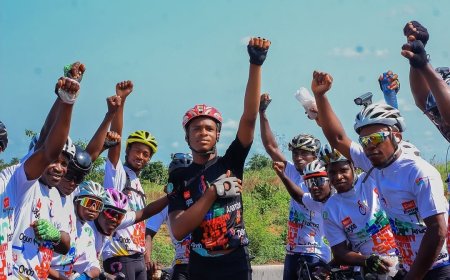
The time has come for Nigerians to stop moving as isolated victims and start standing as a people. A nation that mourns together can demand justice together. A people that speaks together can force accountability. A society that refuses to forget its victims can no longer be easily ignored.
Until then, the snakes will keep refusing to move together — and the system will keep killing them one by one.
What's Your Reaction?
 Like
0
Like
0
 Dislike
0
Dislike
0
 Love
0
Love
0
 Funny
0
Funny
0
 Angry
0
Angry
0
 Sad
0
Sad
0
 Wow
0
Wow
0