Repatriation & Rewrite: Africa's Museums, the Benin Bronzes Debate, and What Decolonized History Looks Like in 2026
In 2025, 119 Benin Bronzes were repatriated to Nigeria from the Netherlands. But who owns them now? Explore the politics, history, and unfinished work of decolonizing stolen African art.
 angieyapsalot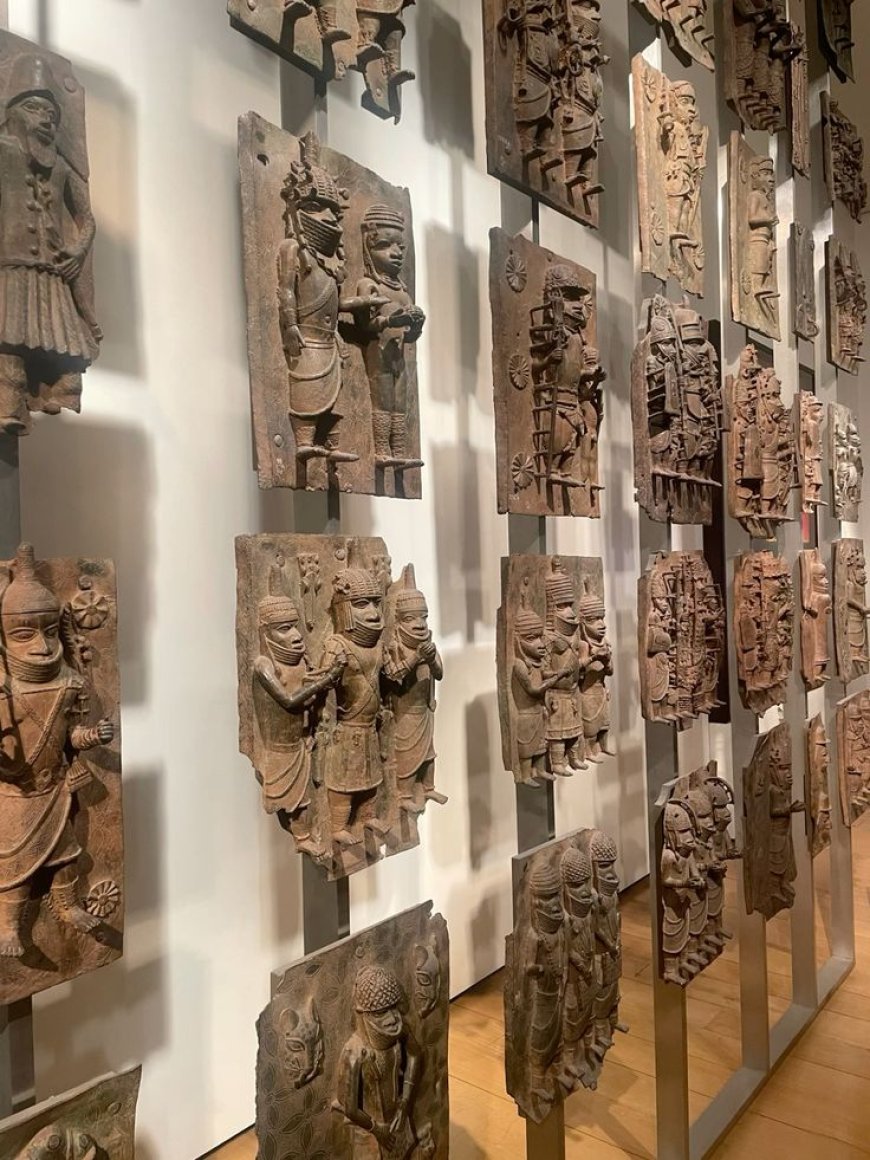
In June 2025, 119 Benin Bronzes arrived in Lagos from the Netherlands, marking the largest single repatriation of these artifacts to Nigeria to date. Museum workers carefully unwrapped each piece; bronze plaques depicting warriors and royal processions, intricate ivory carvings, ceremonial bells and so on. These artifacts had been violently stolen 128 years ago during a British military invasion.
The handover ceremony at the National Museum was celebratory. Government officials spoke about restoring dignity and reclaiming heritage. Beneath the celebration and condemnation of them being taken in the first place, uncomfortable questions simmered: Where will these artifacts actually go? Who really owns them? Is bringing stolen art home enough to truly decolonize history? Is it a good thing done too late?
The Violent History We're Still Reckoning With
The story of the Benin Bronzes began in 1897, when British forces invaded the Kingdom of Benin in what is now southern Nigeria. The military expedition was brutal, as one would expect. Thousands were killed, the royal palace was absolutely destroyed. British soldiers then looted the palace, taking thousands of bronze plaques, sculptures, ivory carvings, and royal regalia that had adorned the palace walls for centuries.
These weren't just decorative objects. The bronzes were historical records, documenting the kingdom's rulers, ceremonies, culture and achievements from the 13th to 18th centuries. They were artifacts you could behold and hold and actually get a sense of what the culture was.
The British sold their stolen artifacts all across Europe and America. The bronzes ended up in museums in London, Berlin, Boston, and dozens of other Western institutions, where they were displayed as exotic curiosities from "primitive" civilizations, stripped of context and meaning.
For over a century, these artifacts have sat in British, European and American museums while Nigeria - specifically the Edo people, whose ancestors created them in the first place - demanded their return.
The Repatriation Wave of 2025
In 2025, the momentum for repatriation has accelerated dramatically. The Netherlands returned a whooping 119 bronzes in what officials called “an effort to address historical injustice”.
Germany committed to returning over 1,130 pieces by the end of the year. The Museum of Fine Arts in Boston transferred two bronzes. London's Horniman Museum repatriated its collection in 2022.
These returns represent a significant shift in how Western institutions approach artifacts acquired during colonial violence. Museums that once insisted they were the best custodians of African art are now acknowledging that "these don't belong here."
But the British Museum, which holds the world's largest collection of Benin Bronzes with 928 pieces, remains a stubborn holdout. The institution cites the British Museum Act 1963, which prevents it from deaccessioning objects. While UK laws governing other institutions have loosened, the British Museum continues to resist.
The irony is painfully funny: Britain, which looted the bronzes in the first place, now uses British law to justify keeping them.
The Problem Nobody's Talking About
This is where the celebration of repatriation runs into an uncomfortable reality: Nigeria can't agree on where these returned artifacts should go or who should control them.
A three-way power struggle has dominated the conversation. The Edo State government initiated plans to build a state-of-the-art museum in Benin City. The Royal Court of Benin, led by the current Oba, objected furiously and announced plans for its own museum on palace grounds. The Nigerian federal government insisted it alone had authority over monuments and artifacts through the National Commission for Museums and Monuments. The squabble is insane.
In May 2023, the late Ex-President Muhammadu Buhari issued a decree attempting to resolve the conflict by recognizing the Oba as the rightful owner of any returned Benin Bronzes. The decree explicitly allowed the Oba to keep artifacts in his palace compound with no obligation to display them publicly. It said nothing about funding for proper storage or display facilities. It contained no restrictions on what the Oba could do with the bronzes, including selling them.
This has created a bizarre situation where museums contemplating repatriation don't actually know what will happen to the artifacts after they return them. Some pieces repatriated from the UK and Germany have reportedly disappeared from public view. The Oba doesn't currently have infrastructure to properly display or preserve thousands of bronzes, so they're sitting in storage while everyone waits for the Benin Royal Museum to be completed (God only knows what decade that will be)
Meanwhile, the Museum of West African Art (MOWAA) project has become entangled in political conflicts between the state and federal government. In November 2024, MOWAA's preview was disrupted, and the Edo State governor reportedly revoked its land rights. A presidential committee was convened to manage the fallout.
This is what decolonization looks like in practice: It's messy, it's very political (almost everything is, these days), it's contested, and far more complicated than simply returning stolen objects and shaking hands.
What Decolonized History Actually Requires
The repatriation of the Benin Bronzes has revealed fundamental tensions in how we think about decolonizing museums and history. Western institutions assumed the hard part was deciding whether to return artifacts. They're discovering that was actually the easy part.
True decolonization requires confronting questions without clean answers:
Who speaks for colonized peoples?
Is it current governments, which may be corrupt or politically motivated? Traditional rulers, whose authority predates colonialism but who may lack democratic legitimacy? Community organizations? All of the above, with inevitably conflicting interests?
What does "return" actually mean?
Is it enough to physically transfer objects back to their countries of origin? Or does meaningful repatriation require ensuring artifacts are displayed publicly, preserved properly, and made accessible to communities they belong to?
How do we prevent new forms of exploitation? Because they're going to try rearing their heads.
Repatriation without adequate infrastructure, funding, and institutional capacity risks creating new problems. If returned artifacts are sold off, disappear into private collections or sit deteriorating in inadequate storage, have we really achieved justice?
Who funds decolonization?
Building world-class museums costs tens of millions of dollars. Should former colonial powers fund the infrastructure needed to properly house returned artifacts since they took them in the first place? Or does that create new dependencies that undermine genuine sovereignty?
These questions are playing out in real-time in Benin City.
The British Museum's Hypocrisy
Let's talk about it again because it really is funny. While Nigeria wrestles with these internal debates, the British Museum watches and uses Nigeria's challenges as justification for its refusal to return artifacts. The implicit argument: "See? They can't even agree among themselves where they their artifacts should go. Better that we keep them safe in London."
This is spectacularly cynical. The British Museum didn't ask permission before looting the bronzes in 1897. It didn't worry about preserving them "properly" while using them to justify narratives of African inferiority and European civilization.
But now, suddenly, the institution is SOO deeply concerned about proper stewardship and clear ownership structures.
The reality is that Nigeria's internal debates about museum governance and cultural ownership are legitimate sovereign matters that Nigerians must resolve for themselves. Those debates don't justify continued possession of stolen property by the institutions that stole it.
What This Shows Us
Despite the complications, the repatriation wave of 2025 represents genuine progress. The Netherlands, Germany, and other countries are acknowledging that colonial looting was wrong and that restitution is necessary - even when it's messy and complicated.
The Edo Museum of West African Art, designed by renowned architect David Adjaye, is still moving forward despite political conflicts and is scheduled to open this year. When completed, it will provide a world-class space for returned bronzes and serve as a center for research, conservation, and cultural education.
Nigeria's internal struggles over museum governance, while frustrating, are actually evidence of how much these artifacts matter. The bronzes aren't sitting in storage because Nigerians don't value them. They're contested because multiple stakeholders care deeply about honoring this heritage correctly, or at least taking the credit for it.
The Unfinished Work
Decolonizing history isn't just about moving objects from European museums to African ones. It's about fundamentally rethinking who gets to tell history, whose perspectives matter, and how we value different forms of knowledge and cultural expression.
It's about acknowledging that Western museums built their collections through violence and theft, and that the "universal museum" concept is itself a colonial logic.
It's about recognizing that formerly colonized people have the right to make their own decisions about their cultural heritage, even if outsiders disagree with those decisions or find them imperfect.
And it's about understanding that there's no clean, simple path from colonial violence to postcolonial justice. The work is ongoing, contested, and will remain complicated for years to come. It's not a clean, rapid process.
The Benin Bronzes are coming home. Not all of them, not yet, and not without conflict over what "home" means. But they're coming.
Real decolonization was never going to be neat. History isn't a museum exhibit you can simply rearrange. It's a living, contested thing that requires constant negotiation, uncomfortable conversations and negotiations, and the willingness to sit with complexity rather than seeking false resolution.
The bronzes are teaching us that lesson all over again, but where will they call home?