





















































A Critical Evaluation of the Doctrine of the Meaning of Creation in the Thought of Thomas Aquinas
This article critically examines Thomas Aquinas’s doctrine of creation. It explores the origins of the concept in Aristotle’s philosophy (Unmoved Mover) and Christian revelation (creation ex nihilo from Genesis), then analyzes how Aquinas harmonizes reason and faith. The paper highlights Aquinas’s metaphysics of participation, the distinction between essence and existence, and the unity of pagan and Christian thought in Scholasticism. It presents creation as a free divine act that gives existenc
Prefer listening? Tap play and the article will be read aloud.
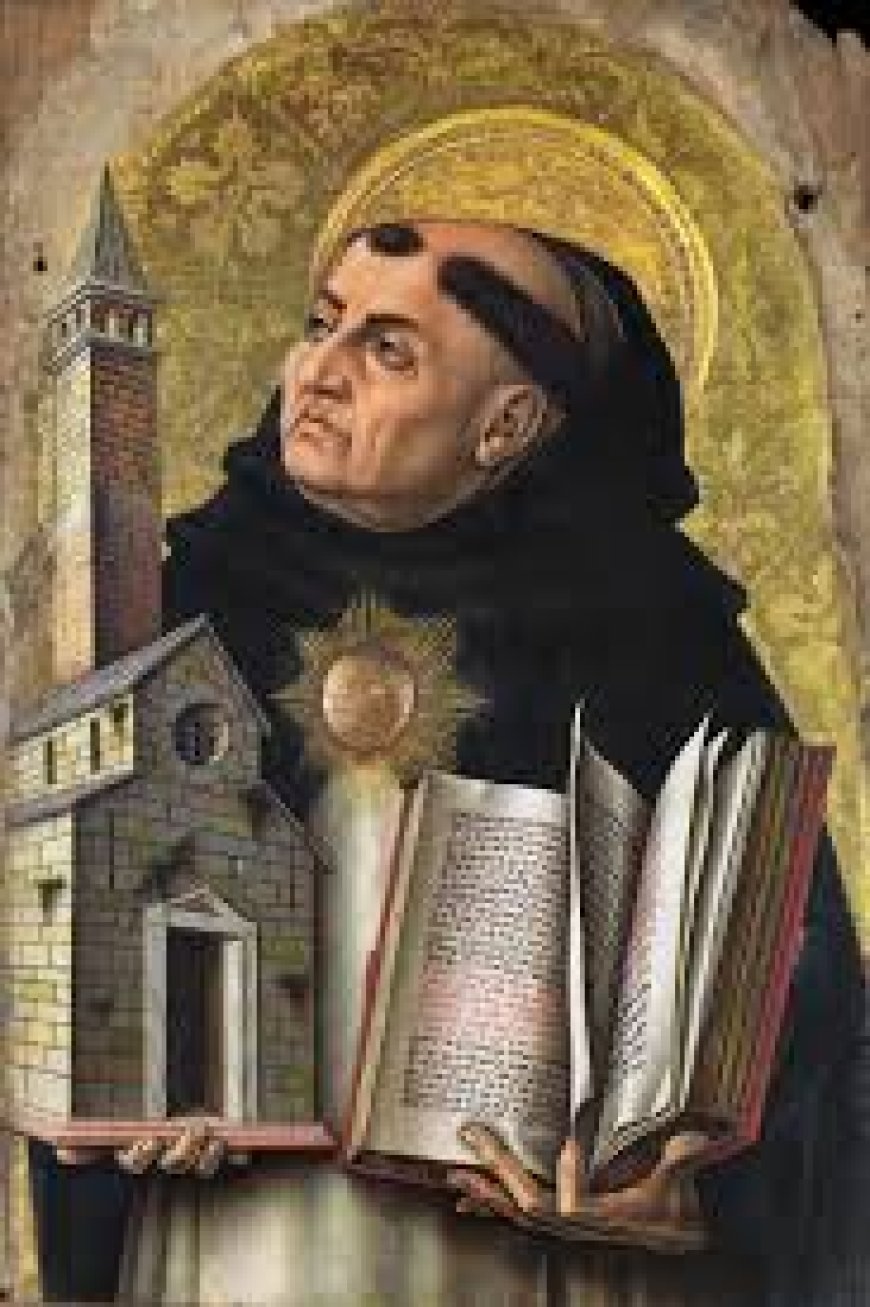
The question of the origin of the world and all that exists has long challenged human understanding. Things do not simply appear; they result from an act or process of bringing them into being, known as creation. Thomas Aquinas defines creation as “the greatest work, wherein something is made from nothing.” This aligns with the biblical account in Genesis 1-2, where God creates all visible and invisible things.
Aquinas, a Christian philosopher and disciple of Aristotle, sought to harmonize philosophical reason with Christian faith. While Aristotle offered insights into the universe’s origin and structure, his view of an eternal world differed from the Christian doctrine of creation ex nihilo (out of nothing). This article critically evaluates Aquinas’s doctrine of creation, examining its origins and meaning, and how Aquinas synthesizes Greek philosophy with Christian revelation.
1. The Origin of the Meaning of Creation
a. Aristotle and Greek Thought
Early Greek philosophers pioneered Western reflection on origins. The Ionians emphasized matter in motion, often moving beyond polytheistic myths toward more rational explanations. Plato critiqued this materialism, rejecting the idea that matter alone explains the world.
He presented the world as the work of a Demiurge (a divine craftsman) who imposes order on chaotic matter, and affirmed that God, not man, is the measure of all things. Aristotle advanced these ideas with a focus on causality. He viewed the universe as eternal and spherical, with the Earth at its center.
Central to his thought is the “Unmoved Mover” , a transcendent cause that initiates motion without itself being moved. This Prime Mover explains the constant series of events in time without being part of them. While not identical to the Christian God, Aristotle’s Unmoved Mover provided Aquinas with a philosophical foundation for arguing the existence of a first cause.
b. Christian Faith
Christianity builds on Jewish revelation, sharing the Hebrew Scriptures. The Book of Genesis describes God creating heaven and earth ex nihilo. The Catechism of the Catholic Church teaches that creation is the foundation of God’s saving plan: “In the beginning, God created the heavens and the earth.”
Key truths emerge: God is eternal and alone gives existence to all things outside Himself; everything depends entirely on Him as Creator. Creation reveals God’s goodness and initiates the history of salvation. Unlike Greek eternalism, Christian doctrine insists the world had a beginning and is contingent, mutable, and dependent on God’s free will.
2. The Meaning of the Doctrine of Creation by Thomas Aquinas
a. Understanding in Scholastic Thought
Scholasticism, the medieval synthesis of faith and reason taught in European universities, drew heavily on Aristotle and Church Fathers like Augustine. Aquinas stands as its foremost figure. For him, creation means participating in God’s being. Creatures receive existence, movement, and specificity from God, the primal source of all beings. God moves things as the ultimate object of desire and knowledge, acting for His own goodness.
Aquinas’s metaphysics distinguishes essence from existence. Only in God are they identical; creatures exist by participation. Creation is not a temporal change or motion from pre-existing material but a radical gift of being.
This view grants autonomy to natural sciences created things have their own natures while affirming their total dependence on God. Aquinas held that reason can demonstrate creation, even if the world’s eternity remains philosophically conceivable.
b. Unity Between Pagan and Christian Thought
Aquinas masterfully unites pagan philosophy and Christian theology. In works like the Summa Theologiae, he examines the emanation of all beings from God. Creation is the universal emanation of being from the First Cause.
He argues it is necessary that all things are created by God, as nothing can exist without the universal cause.
Creation is not a change (which requires pre-existing matter) but a relation: the creature’s total dependence on God. It occurs ex nihilo, a free act of the transcendent Creator.
Aquinas distinguishes philosophical creation (accessible to reason via causality) from theological creation (understood fully through revelation and faith). This synthesis respects both the autonomy of reason and the primacy of faith, showing that Greek insights (especially Aristotle’s) can serve Christian doctrine when properly purified.
Conclusion
Aquinas’s doctrine of creation integrates Aristotelian philosophy with Christian revelation. From Greek thought, he adopts rigorous causality and the Unmoved Mover; from faith, he receives the truths of ex nihilo creation, divine freedom, and goodness. By distinguishing yet uniting reason and faith, Aquinas demonstrates that creation is intelligible both philosophically (as dependence on a First Cause) and theologically (as a free gift initiating salvation history).
His approach affirms the autonomy and intelligibility of the natural world while grounding it in God. Ultimately, Aquinas shows that what we believe about creation informs how we understand existence and live meaningfully—harmonizing intellect, faith, and moral life. This synthesis remains a model for integrating reason and revelation
What's Your Reaction?
 Like
0
Like
0
 Dislike
0
Dislike
0
 Love
0
Love
0
 Funny
0
Funny
0
 Angry
0
Angry
0
 Sad
0
Sad
0
 Wow
0
Wow
0