












































Yoruba Ronu: Accountability, Not Blind Loyalty
How a historic call for reflection risks becoming a shield against accountability—and why democracy demands scrutiny over ethnic loyalty.
Prefer listening? Tap play and the article will be read aloud.
By Adejumoke Adeoti
“Yoruba ronu” — Yoruba, think — entered Nigeria’s political vocabulary through Hubert Ogunde’s 1964 satirical play, a work that urged introspection and vigilance within the Yoruba political class. Six decades later, the phrase still circulates widely. But its meaning has shifted. What began as a call for critical thinking is now, in some quarters, deployed as a warning against dissent. Criticise a Yoruba public official and you risk being labelled disloyal, ungrateful, or poorly raised.
That interpretation has little to do with solidarity. It functions instead as a protective shield for those in power — and it is Yoruba citizens, more than anyone else, who should be concerned by that trend.
A scandal that raises serious questions
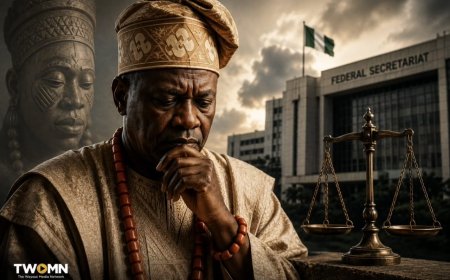
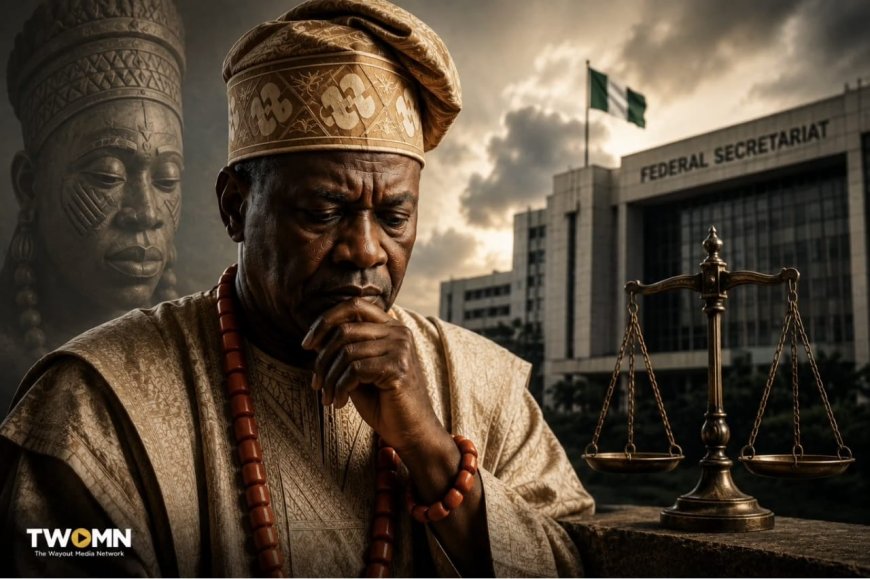
The recent case involving a fake government agency — the Presidential Foreign Intervention Promotion Council — has exposed troubling gaps in Nigeria’s oversight systems. The alleged scheme reportedly operated with a N1.3 billion budget, secured office space in the Federal Secretariat, and obtained police escorts, all under the guise of official authority. One man is accused of forging documents, leasing offices, and moving through federal institutions with ease.
The more pressing issue is how such an operation went undetected. Several officials with direct or indirect responsibility – including the Chief of Staff, the Special Adviser on Information, the EFCC chairman, who was photographed presenting an award to the accused, the Inspector General who approved police protection, and the Senate Appropriations Committee chairman – have yet to offer clear explanations.
This is not a referendum on the Yoruba as an ethnic group. It is a question about individuals in positions of public trust and whether they exercised due diligence.
Beyond ethnicity: the culture that enables failure
The Yoruba have long been associated with academic achievement and public service across Nigeria. That reputation was built through decades of scholarship, professional excellence, and civic contribution. It should not be invoked to deflect scrutiny from officials who fall short of basic oversight. Nor should it be used to silence those – Yoruba or otherwise – who raise legitimate concerns.
The deeper problem is a political culture that prizes loyalty to “our person in office” over competence and accountability. This culture is not unique to any ethnic group; it is a national phenomenon. But its consequences are the same everywhere: it shields underperformance, discourages scrutiny, and erodes public trust.
What Nigeria needs now
Nigeria does not need silence framed as unity. It needs accountability applied evenly, without tribal considerations. A credible, independent investigation is essential. Officials with questions to answer should be named, examined, and held responsible where appropriate.
And Nigerians should reject the notion that criticising a leader who shares their background amounts to betrayal. In a functioning democracy, demanding accountability from one’s own community is not disloyalty — it is civic responsibility.
Dr Adeoti is a lecturer in Human Resource Management and Organisational Behaviour, Brunel University of London. She can be reached via adejumoke.adeoti3@brunel.ac.uk
What's Your Reaction?
 Like
1
Like
1
 Dislike
0
Dislike
0
 Love
0
Love
0
 Funny
0
Funny
0
 Angry
0
Angry
0
 Sad
0
Sad
0
 Wow
0
Wow
0