























































Studied One Thing, Forced Into Another: The Underemployment Pandemic in Nigeria
This article explores the growing mismatch between education and employment in Nigeria, where many graduates are forced to work outside their field of study due to economic pressure, low job availability, and underemployment. It explains how rising living costs, limited job opportunities, and changing employer expectations are reshaping career paths for young Nigerians.

Prefer listening? Tap play and the article will be read aloud.

In an ideal system, education is meant to lead directly into employment. You study a course, you build skills around it, and eventually, you enter a job that reflects your training. But in Nigeria today, that pathway is no longer guaranteed.
Instead, there has been a growing reality where graduates are ending up in careers completely unrelated to what they studied. Not necessarily by choice, but by necessity. The economy is shaping decisions in ways that are forcing people to prioritise survival over specialization.
A degree is still valuable, but it no longer guarantees direction. For many young people, it has become just one part of a longer and more uncertain journey into the labour market.
THE EDUCATION AND EMPLOYMENT GAP
Source: Pinterest
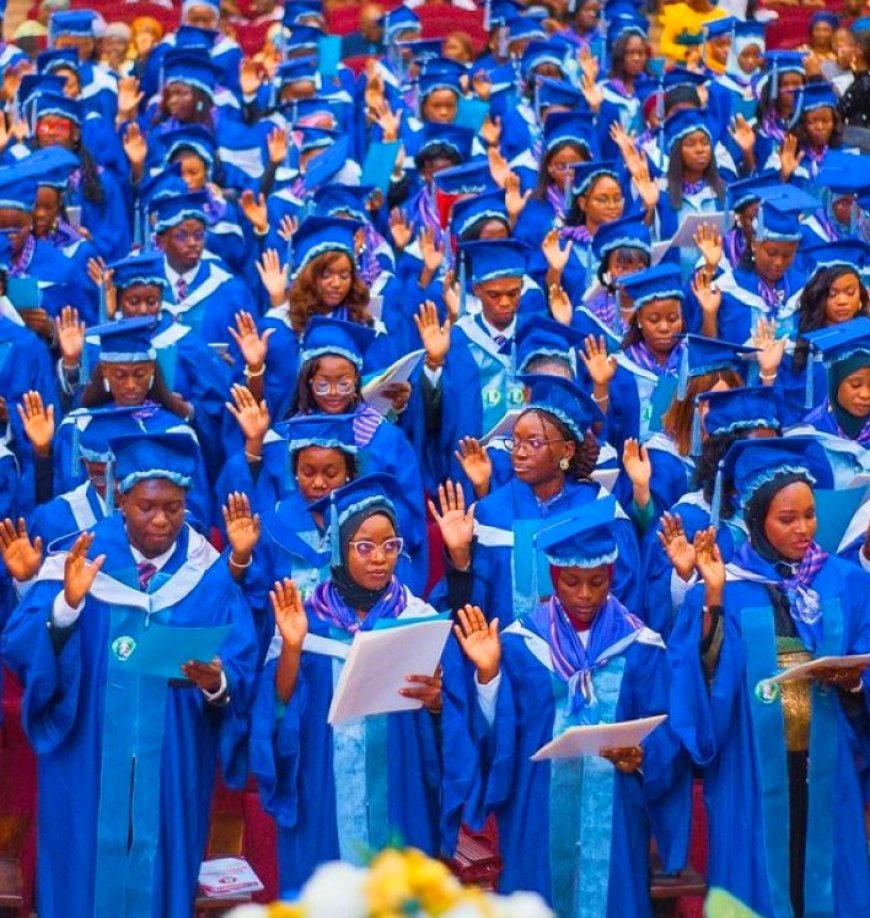
Nigeria produces thousands of graduates every year across different disciplines, including engineering, law, accounting, mass communication, sciences, and social sciences. However, the labour market does not expand at the same pace.
This creates a widening gap between academic output and available job opportunities. While universities continue to produce graduates in large numbers, the economy is not generating enough structured roles to absorb them at the same rate.
As a result, many graduates are unable to secure roles in their field of study, not because they are unqualified, but because the system itself is overcrowded and under-absorbing.
Over time, this gap has become more visible, especially among young people transitioning from school into the workforce. What used to feel like a temporary delay in employment has now become a long-term reality for many.
In practical terms, graduation no longer signals entry into a career path. It often signals the beginning of a long search for any available opportunity.
WHY GRADUATES ARE LEAVING THEIR FIELD OF STUDY

Source: Pinterest
One of the most significant reasons for this shift is economic pressure. Many graduates cannot afford to remain unemployed while waiting for jobs that align perfectly with their degrees. The cost of living continues to rise steadily, and financial independence becomes urgent much earlier than expected. Rent, transportation, feeding, data, and family expectations quickly turn job search from a “career decision” into a survival decision.
As a result, individuals begin to take available opportunities, even if they are unrelated to their academic background. The priority shifts from “what did I study?” to “what can I do right now to survive?”
Another major factor is low entry-level pay in many fields. Even when jobs exist within a graduate’s area of study, the compensation is often not enough to meet basic living expenses. In many cases, the salary attached to a degree-related job is similar to or even lower than roles outside the field that require less specialization. This forces people to reconsider whether staying in their field is financially sustainable in the short term.
There is also a growing shift in hiring practices. Employers are increasingly prioritising practical skills, adaptability, and experience over formal degrees alone. This means that graduates who lack hands-on experience or portfolio work may struggle to secure roles in their trained fields, even with strong academic qualifications.
THE REALITY OF UNDEREMPLOYMENT
In Nigeria, employment does not always mean adequate employment. A large portion of the workforce is engaged in underemployment, where individuals work in roles that do not match their qualifications or do not fully utilise their skills.
Recent labour reports show that while employment exists, underemployment remains a persistent issue affecting a significant portion of the population. Many people are technically working, but not in ways that reflect their education, training, or long-term career goals.
This creates a slow and silent shift where graduates gradually detach from their original fields, not due to lack of interest, but due to limited opportunity structures and financial pressure. Over time, skills that were once studied intensively begin to fade or become secondary, replaced by whatever job is available and sustainable at the moment.
COMMON CAREER SHIFTS AMONG GRADUATES
It is now common to see graduates transitioning into fields such as sales, customer service, digital marketing, logistics, administration, and entrepreneurship, regardless of their academic background.
Engineering graduates may end up in business development roles. Mass communication graduates may move into marketing or operations. Science graduates may shift into retail, tech support, or freelance work. Law graduates may find themselves in administrative or entirely unrelated corporate roles.
These transitions are often gradual. Few people wake up and abandon their field instantly. Instead, it happens through small compromises, taking temporary jobs, extending internships, accepting unrelated offers, and slowly building experience in a different direction.
Over time, some individuals fully abandon their field of study, while others attempt to blend their education with their current work in more flexible ways, creating hybrid career paths that did not exist in the original academic plan.
IMPACT ON YOUNG GRADUATES
Source: Pinterest
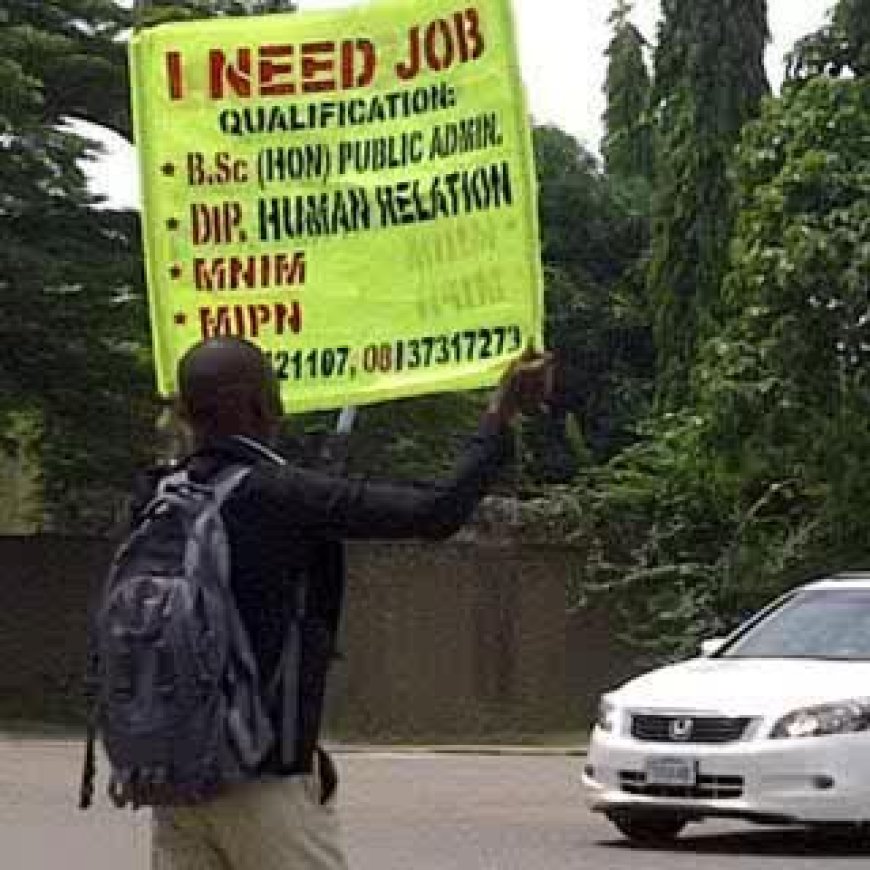
This disconnect between education and employment has both practical and emotional effects.
On a practical level, it affects career progression, as individuals may no longer build consistent experience in their trained field. This makes it harder to return to that field later, even if opportunities eventually appear.
On an emotional level, it creates confusion about identity and purpose. Many young Nigerians begin to question the value of their degrees, not because education is irrelevant, but because the system around employment does not always support direct progression.
There is also a quiet frustration that builds over time, the feeling of investing years into a path that does not translate into expected outcomes. For some, this leads to reinvention. For others, it leads to resignation.
IS EDUCATION STILL RELEVANT?
Despite these challenges, education remains important. However, its role is changing significantly in the modern economy. A degree is no longer a direct ticket into employment. Instead, it now serves as a foundation for building additional skills, adaptability, and credibility in the job market.
The modern economy increasingly values a combination of education and practical skill sets. Those who are able to merge both often have better chances of navigating the current labour landscape and creating opportunities beyond traditional job structures. In this sense, education has not lost value, it has simply lost its guarantee.
CONCLUSION
The gap between education and employment in Nigeria reflects a broader economic reality that continues to evolve.
Graduates are not necessarily abandoning their fields due to lack of interest, but because the system around them does not always provide enough opportunities to remain within those fields.
Until the labour market becomes more aligned with academic output and broader economic conditions improve, many Nigerians will continue to build careers outside their original degrees.
This is not simply a story of wasted education. It is a story of adaptation in a changing economy, where survival, flexibility, and opportunity often matter more than the original plan.
What's Your Reaction?
 Like
0
Like
0
 Dislike
0
Dislike
0
 Love
0
Love
0
 Funny
0
Funny
0
 Angry
0
Angry
0
 Sad
0
Sad
0
 Wow
0
Wow
0