






















































Culture or Cover? The Ozoro Festival of Disgrace
Culture Is Not a Shield for Abuse: Unpacking the Outrage in Ozoro

Prefer listening? Tap play and the article will be read aloud.

What happens when ‘culture’ is used to justify violence against women?
The question has been at the center of a growing controversy in Ozoro, Delta State, Nigeria, after disturbing videos of women being chased, stripped, and sexually harassed during the Alue-Do festival went viral online.
The clips have fuelled national outrage, with social media users describing the event as a “rape festival." Which, in all fairness, can be termed as such; however, police and community leaders have since disputed that description, saying the Alue-Do is a traditional fertility festival that was never meant to be about sexual violence.
But the controversy refuses to disappear. It has opened a much bigger debate about culture, consent, accountability, and justice, resulting in two questions: when is tradition used to excuse harm, and who stands up for the women caught in the middle?
What happened in Ozoro?
For those unfamiliar, in the name of tradition, an entire community was held hostage by a tradition. These incidents took place on March 19, 2026, during the Alue-Do festival in Oramudhu, one of the traditional communities that make up the Ozoro Kingdom in Delta State.
There have been videos that were circulated across social media that showed groups of men surrounding and harassing women in public. In some of the clips, women appeared to have their clothing torn as they were groped and pursued by crowds.
As the clips spread, people’s reactions were of anger, disappointment, shock, and calls for authorities to step in.
Stay indoors or risk becoming a target. That was reportedly the warning given to women during parts of the festival, according to residents, witnesses, and activists. Say that was verified; that raises disturbing concerns, such as, were these incidents acts of violence, or was the mistreatment of women being promoted as part of the festival?
As a result, social media users labeled it as a “rape festival," but it has since been disputed by both the police and representatives of the Ozoro community.
What makes this even more profoundly disturbing are the faces of the perpetrators. In these horrifying video clips circulating online, we see boys—some as young as ten—participating in the assault. How insane! Their faces animated with a terrifying glee. These are not 'animals.' They are boys who likely sit in classrooms, who know the latest TikTok trends, and who have mothers and sisters and aunts waiting for them at home.
Police Making Arrests
The Delta State Police Command moved to investigate the incident. Well initially, the police announced the arrest of community head and festival organizer Chief Omorede Sunday and four other suspects. The suspects were then transferred to the State Criminal Investigation Department for further investigation.
The number of arrests later increased. By March 22, police said 15 suspects had been arrested, including the community head and chief organizer. The police said preliminary findings indicated that suspected criminal elements had taken advantage of the festivities to carry out the alleged harassment and molestation.
Police later reported that 16 suspects were in custody. However, authorities also said that no victim interviewed by police had officially reported being raped. According to Delta State Police spokesperson Bright Edafe, four girls interviewed after the incident did not report rape, although the police acknowledged the disturbing scenes of assault and continued investigating.
That distinction matters. The absence of an official rape report does not erase the seriousness of what was captured on camera. Sexual harassment, unwanted touching, intimidation, and the public stripping of women are serious forms of violence and abuse in their own right.
What is the Alue-Do festival?
At the heart of the controversy is a festival that many people outside Ozoro had never heard of before the videos went viral.
Community representatives say Alue-Do is an ancient fertility tradition associated with prayers and blessings for women seeking to have children.
Ozoro Progress Union President-General Asiafa Berkeley rejected the description of the event as a “rape festival," saying the festival had existed for centuries and was intended as a symbolic fertility rite. Other community accounts similarly describe Alue-Do as a periodic cultural practice, particularly associated with the Oramudhu area rather than the entirety of Ozoro Kingdom.
Community leaders have also explained that, traditionally, young, unmarried women are expected to remain indoors during a particular period of the festival. According to Berkeley, the restriction is rooted in an old Isoko tradition connected to expectations around marriage and pregnancy.
However, this explanation has generated another uncomfortable question:
If women are expected to stay indoors for their own safety during a cultural event, what happens when someone does come outside and is then subjected to violence?
Tradition does not erase accountability.
The Ozoro Palace has been clear in distancing itself from the reported abuse.
In a statement, the palace condemned the harassment and intimidation of women, describing the reported conduct as unacceptable and inconsistent with the values and traditions of the Ozoro Kingdom and the wider Isoko nation. The palace also stressed that symbolic cultural practices should never become harassment, coercion, abuse, or violations of personal dignity and rights.
That position is significant.
See, there’s a difference between questioning or criticizing a cultural practice and condemning criminal conduct committed under the cover of a cultural gathering. African cultures are diverse, complex, and deserving of preservation. But let’s understand that culture cannot automatically become a defense for behavior that violates another person's safety.
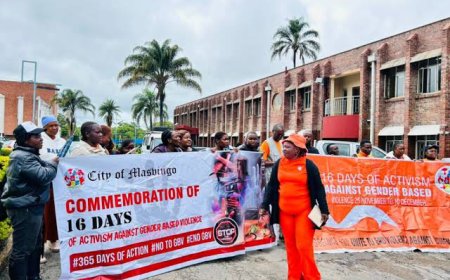
The National Human Rights Commission of Nigeria took an even stronger position, calling for the prosecution of those responsible for sexual violence during the festival. The commission said cultural practices should not undermine constitutionally protected rights, including dignity, freedom of movement, and protection from discrimination.
Victim Blaming
Another part of the controversy concerns the women who were outside during the festival. Reports indicated that women had been warned to remain indoors during the ritual period. Yet the existence of such a restriction does not transfer responsibility for violence from the perpetrator to the person who was attacked.
A woman being outside does not give anyone permission to touch her.
A woman violating a cultural expectation does not give a crowd permission to tear her clothes. And being in a public space does not mean a person has surrendered their right to dignity. These principles should remain clear regardless of whether the setting is a festival, nightclub, university campus, workplace, or street.
Cultural Festival Under Scrutiny
As expected, the controversy has also created a difficult situation for the Ozoro community.
On one hand, community leaders have argued that the Alue-Do festival has been misrepresented and that the actions captured in the videos do not represent its purpose or traditions.
On the other hand, the footage has forced national attention onto what happened during the event and the conditions that allowed the alleged abuse to occur.
The Delta State Government condemned the incident, while authorities moved to investigate those allegedly involved. The festival was subsequently banned, with the case transferred to the State Criminal Investigation Department. The Nigerian Bar Association also condemned the reported sexual assaults, describing the incident as a “national disgrace” and calling attention to concerns about women's safety.
So, is it a “rape festival”?
The evidence currently available does not support presenting that label as an established description of the Alue-Do festival.
Police have said they had no official report of rape from the women they interviewed. Community and palace representatives have rejected the label, arguing that the festival is a fertility tradition that was exploited by individuals who engaged in criminal behavior.
But dismissing the entire controversy simply because the term “rape festival” is disputed would also miss the bigger story. Women were reportedly sexually harassed and assaulted. Videos documenting the incidents circulated publicly. Suspects were arrested. Authorities condemned what happened. Human rights officials called for prosecution.
Those facts are enough to demand scrutiny. The more important question may therefore not be whether Ozoro has a “rape festival," but how a traditional gathering became the setting for such disturbing acts, as well as what can be done to prevent them from happening again.
Call for Justice?
For Ozoro, the controversy is now about more than reputation.
It is about accountability, safety, and the relationship between cultural traditions and modern human rights standards.
Preserving African traditions should not require protecting harmful behavior. And challenging harmful behavior should not require dismissing an entire culture. The Alue-Do festival may have a history that stretches back generations. But traditions, like communities, exist in the present, and they must be able to evolve when circumstances demand it.
The plea that is now out is that the Delta State Government and the Nigerian Police Force should do the jobs they are mandated to do. Enforce the law. Protect all citizens.
The responsibility also lies with the traditional leaders in Ozoro summoning the moral courage to finally and forever excise this cancer from their festival. And this is a call on us, the journalists, activists, citizens, women, and men, to keep the spotlight fixed on Ozoro every day until every woman and girl can walk the streets of her own town any second without fear.
Because culture should give people a sense of belonging, not give violence a place to hide.
What's Your Reaction?
 Like
0
Like
0
 Dislike
0
Dislike
0
 Love
0
Love
0
 Funny
0
Funny
0
 Angry
0
Angry
0
 Sad
0
Sad
0
 Wow
0
Wow
0