
























Osun After the Blood: Who Speaks for the Dead?
As celebrations follow Governor Adeleke’s re‑election, unanswered questions about pre‑election violence — and the families left grieving — demand urgent truth, accountability and justice.
Prefer listening? Tap play and the article will be read aloud.
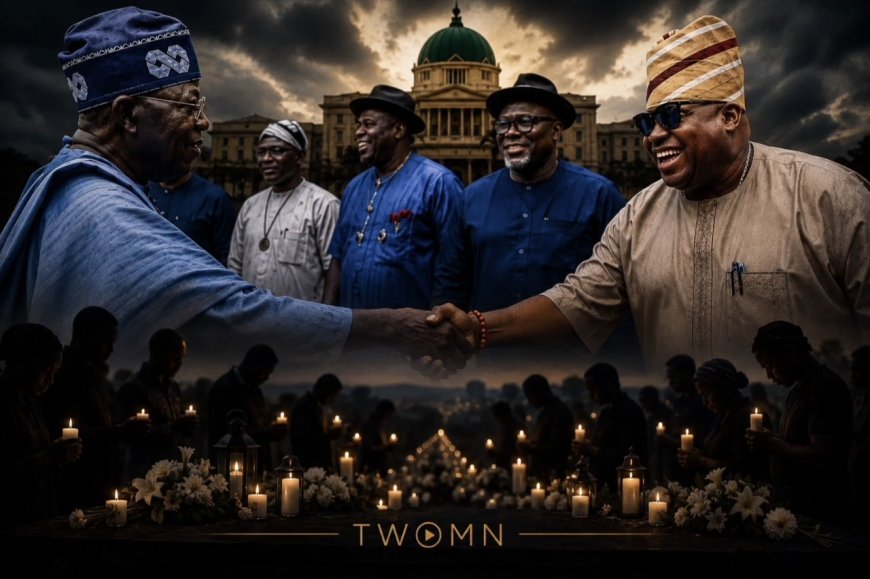
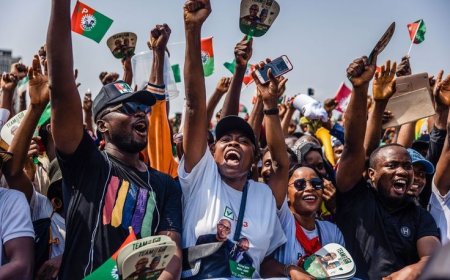
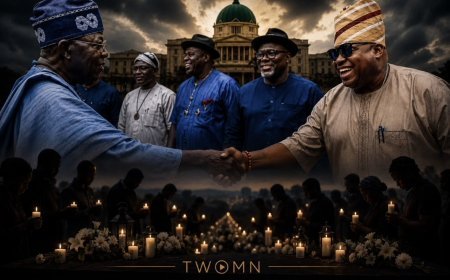
Osun’s governorship election has ended. Governor Ademola Adeleke has secured another term, celebrations have filled the air, and political figures have exchanged warm congratulations. President Bola Ahmed Tinubu has applauded the victory, and Adeleke has reaffirmed his support for Tinubu’s 2027 bid. Yet beneath the music, the dancing and the political embraces lies a harder, unavoidable question: who speaks for the people who never lived to see the election conclude?
Whatever interpretation is placed on the result, one truth must not be buried under celebration — Osun went into this election after a troubling wave of political violence. Lives were lost. Families were shattered. And while the election produced a winner, it did not produce answers.
Warnings came long before election day. Civil society organisations raised alarms about politically motivated attacks. The situation grew serious enough to attract intervention from the Nigeria Police Force, which reminded political actors that elections must never become war. Some victims were not politicians. One of the most heartbreaking cases was 14‑year‑old Ezekiel Olapade, reportedly shot dead in Ilobu during chaos around the local government secretariat. According to reports, he was simply trying to help his mother after she fell in the panic.
Governor Adeleke himself referenced unresolved killings — Eluyera in Ikire, Ezekiel in Ilobu, Aderogba in Esa‑Oke — and demanded arrests. Other shootings and attacks were reported, with political camps trading accusations. Casualty figures varied widely. Some claims suggested 29 deaths; others placed the number closer to 50. These figures require independent verification, but one fact is beyond dispute: people were killed, others were injured, and the truth about what happened remains unsettled. That alone should trouble every Nigerian.
Then came election day. Adeleke won, and almost instantly the national conversation shifted from bloodshed to celebration. Congratulatory messages poured in. Political alliances resurfaced. Adeleke endorsed Tinubu. Tinubu’s allies welcomed the gesture. Adeleke’s camp denied any formal agreement. But the optics raise questions. Only weeks earlier, Adeleke had accused prominent APC figures of encouraging violence. His administration insisted Tinubu personally was not involved and praised his commitment to a fair election. Now the election is over, and attention has moved on. But justice cannot move on that quickly.
A victory speech does not close a murder case. A certificate of return does not explain who fired a gun. A congratulatory message cannot comfort parents who buried a child. Political reconciliation cannot replace justice.
Activist Omoyele Sowore criticised Adeleke’s endorsement of Tinubu, arguing that while lives were lost, political leaders have quickly returned to protecting political and family interests. Sowore cited a much higher casualty figure — one that must be independently verified. But even without accepting every claim, his intervention forces a deeper question: what happens to the victims now?
This is where Nigerian politics repeatedly fails ordinary people. Violence dominates the weeks before an election. Accusations fly. Security agencies promise investigations. People are attacked. Some die. Then someone wins. Suddenly there are handshakes, phone calls, endorsements, defections and calculations for the next election. Slowly, the victims fade from the conversation. That cycle must end.
Davido’s celebration of his uncle’s victory is understandable. Family wins, and families celebrate. But influence carries responsibility. Davido commands an audience many politicians could never reach. Imagine the impact if, amid the celebrations, he publicly demanded justice for every person killed — regardless of party. It would not diminish Adeleke’s victory. It would elevate it. The strongest message after winning should not be we defeated them. It should be: nobody should die because politicians want power.
The Osun election also exposes a familiar flaw in Nigerian politics: the argument of the “lesser evil.” Citizens are told they must choose between two dominant options. They are warned that refusing one empowers the other. Over time, survival replaces principle. This logic is dangerous. When people become emotionally attached to political camps, wrongdoing by our side becomes excusable, while wrongdoing by their side becomes unforgivable. Accountability dies when loyalty decides who deserves condemnation.
The principle should be simple. If APC supporters committed violence, investigate and prosecute them. If Accord supporters or people linked to Adeleke committed violence, investigate and prosecute them too. If politicians funded thugs, expose them. If security personnel enabled violence, hold them accountable. And if allegations against named individuals cannot be proven, clear their names. Justice cannot wear a party jersey.
Adeleke has won. That victory gives him not just another mandate, but a greater responsibility. Osun deserves answers. Who was killed? Where did the killings happen? Under what circumstances? Who has been arrested? Which cases remain open? Who sponsored the perpetrators? What happened to earlier investigations? What support is being given to families? These questions should not disappear because supporters are celebrating. Adeleke himself previously demanded arrests regardless of affiliation. The police promised justice. Now that the election is over, those commitments must be honoured.
There must also be a transparent, independently verifiable record of the victims. Competing casualty figures should not become partisan weapons. Establishing who died, how they died and what has been done since is the minimum respect owed to the dead.
It is easy to remember victims when their deaths are politically useful. The harder test comes after victory. Will their names still matter now that the votes are counted? Will politicians demand investigations when yesterday’s opponents become tomorrow’s allies? Will supporters seek justice even when evidence points to their own camp? Will celebrities use their platforms for victims as passionately as they use them for candidates? These are the questions Osun must confront.
The election is over, but the obligation to seek justice is not. Adeleke can celebrate. Tinubu can congratulate him. Davido can celebrate his uncle. Political alliances can form. Plans for 2027 can begin. But somewhere in Osun, families are grieving. For them, election season ended not with music or dancing, but with loss.
Nigeria owes those families more than rhetoric. It owes them truth, accountability and justice — investigations that follow evidence wherever it leads, without regard for party, status or alliance. Democracy cannot count the votes of the living while forgetting the blood of the dead.
Osun has chosen its governor. Now it must answer a harder question: Who speaks for the dead?
What's Your Reaction?
 Like
0
Like
0
 Dislike
0
Dislike
0
 Love
0
Love
0
 Funny
0
Funny
0
 Angry
0
Angry
0
 Sad
0
Sad
0
 Wow
0
Wow
0