


































When Nobody Bows: What Tony Elumelu and Fani‑Kayode Teach Us About Power
A reflection on how everyday moments reveal character, challenge Nigeria’s big‑man culture and redefine what true power looks like.
Prefer listening? Tap play and the article will be read aloud.
Sometimes a person’s character becomes visible not through dramatic events, but through small, ordinary moments that go slightly wrong — a misplaced greeting, an unexpected question, a forgotten protocol. In those brief slips, titles and carefully managed public images fall away, revealing how a person truly relates to power.
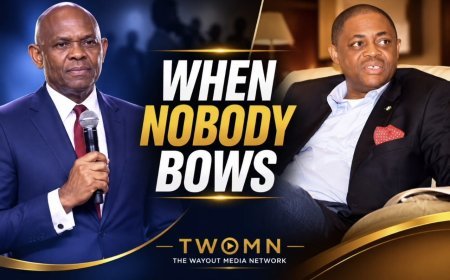
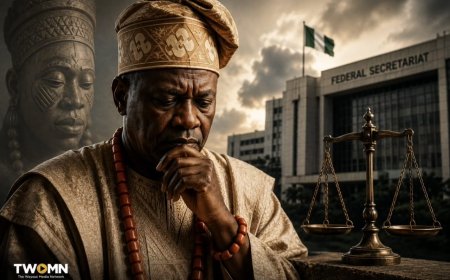
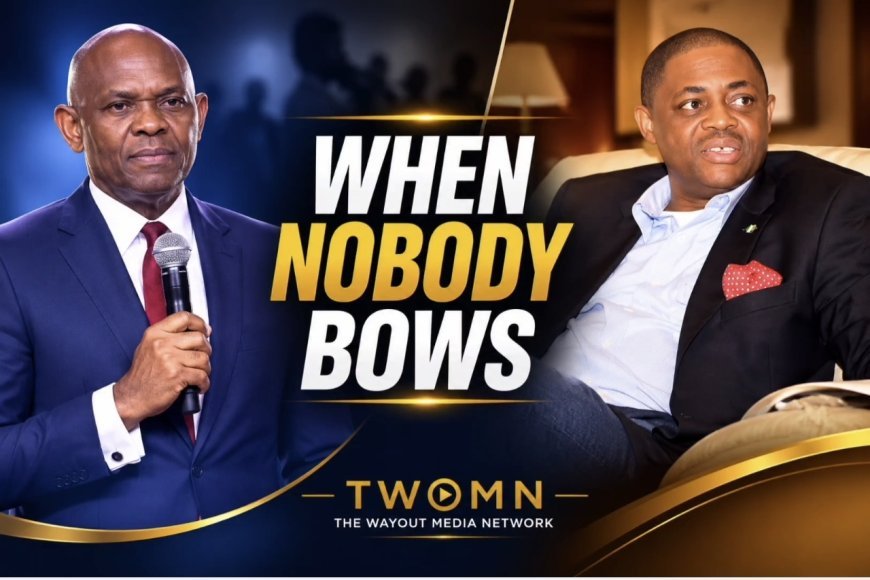
A recent exchange involving Nigerian businessman Tony Elumelu illustrates this. During a conversation with a graduate trainee, she addressed him simply as “Tony.” He could have taken offence or turned the moment into a lesson on hierarchy. Instead, he laughed lightly and corrected her with calm politeness: “You won’t call me Tony. You’ll call me Mr Tony or ToE.”
The correction itself is not remarkable. What matters is how he delivered it — without embarrassment, theatrics or any attempt to diminish her. He set a boundary without turning it into a performance.
This contrasts sharply with an incident from August 2020 involving former Aviation Minister Femi Fani‑Kayode and Daily Trust journalist Eyo Charles. When Charles asked who was “bankrolling” the minister’s tour, Fani‑Kayode erupted. He called the journalist “very stupid,” challenged him aggressively and berated him publicly. The outburst overshadowed the event and drew widespread criticism. He later apologised.
These moments occurred years apart and under different circumstances. One mistake in address is not the same as a politically sensitive question. Neither incident defines either man entirely. But placed side by side, they open a deeper conversation about power, status and Nigeria’s culture of the “big man.”
Perhaps the most revealing question about someone with influence is not, How powerful are you? but rather: What happens when someone forgets that you are powerful?
Nigeria has built an elaborate culture around importance. Titles, convoys, protocol, seating arrangements — all can become markers of hierarchy. Across politics, business, academia, traditional institutions and religious spaces, people often measure their worth by the deference they command. From this emerges the familiar phrase, “Do you know who I am?” It is rarely a request for identification. It is a reminder of rank.
But greatness can be understood differently. A person can know exactly who he is without needing everyone around him to tremble before him.
That is the quiet lesson in the Elumelu moment. Status and civility do not have to be enemies. Humility becomes meaningful when a person has enough influence not to be humble — when he could demand special treatment or embarrass someone, but chooses restraint instead.
Perhaps the true test of a “big man” is not how many people stand when he enters a room, but how he behaves when someone doesn’t.
How does he respond when a receptionist doesn’t recognise him? When a waiter makes a mistake? When a junior colleague addresses him informally? When an official asks him to wait? When a journalist asks a question he dislikes?
Does power make him louder — or calmer?
It is also important to note that Fani‑Kayode apologised. He acknowledged he had been “too hard” on the journalist and admitted no leader should react that way. That matters. Any honest discussion about character must leave room for reflection and correction.
So the lesson is not that Elumelu is permanently humble and Fani‑Kayode permanently arrogant. Human beings are more complex than their best or worst viral moments. Instead, these encounters show the choices available when someone feels their dignity has been challenged. One shows how to correct without humiliating. The other shows how quickly anger can escalate — and how necessary it is to recognise when one has gone too far.
There is a message here for Nigeria’s politicians, business leaders, celebrities, religious figures and everyone commonly described as a “big man” or “big woman.”
You do not become smaller by speaking respectfully to someone with less money than you. You do not lose authority by correcting someone without shaming them. You do not surrender dignity by answering a difficult question calmly. And you certainly do not become more important by making another person feel insignificant.
People secure in their accomplishments often have less need to perform their importance.
There is also a message for the rest of us. Nigerians sometimes help sustain the culture of excessive deference that we later criticise. Political office holders are treated like rulers rather than temporary custodians of public authority. Employees become fearful of executives. Wealth is mistaken for superior human worth. Titles begin to dictate how much dignity others must surrender.
Eventually, some powerful people start believing the mythology built around them.
A healthier society should respect achievement without worshipping achievers, recognise authority without erasing dignity, and honour leadership without turning leaders into demigods.
Tony Elumelu did not become less accomplished because he laughed before correcting someone. Fani‑Kayode did not become more important because he raised his voice. These contrasting moments remind us that volume is not authority, intimidation is not leadership and humility is not weakness.
Power is easy to display when everyone around you is powerless. The real test is what you do when you have the ability to embarrass or intimidate someone — and choose not to.
True greatness is not measured by how small you can make others feel. It is revealed by how much dignity you allow them to retain in your presence.
— TWOMN Editorial
What's Your Reaction?
 Like
0
Like
0
 Dislike
0
Dislike
0
 Love
0
Love
0
 Funny
0
Funny
0
 Angry
0
Angry
0
 Sad
0
Sad
0
 Wow
0
Wow
0