

















































The "Independent Woman/Man" Trap: When Self-Sufficiency Becomes a Wall
The hidden cost of doing it all alone

Prefer listening? Tap play and the article will be read aloud.

One is inclined to believe that independence is always a sign of strength. As we know, having your own money, making your own decisions, and knowing that you can survive without someone else are hardly qualities worth apologizing for. However, somewhere between those who stand by, “know your worth” and “never depend on anyone," independence literally has a rebrand. Weird enough, needing help became embarrassing, accepting a favor came with suspicion, and allowing someone to do something kind started to feel less like generosity and more like signing an invisible contract. For someone who prides themselves on self-sufficiency, the question is not always whether they can handle something themselves. Sometimes, it is what they believe they might owe if they allow someone else to help.
Struggling Over Asking
Have you seen how there’s always someone who’d rather suffer in silence than ask for help? These types of people will carry everything on their shoulders, figure out problems by themselves, and insist they are fine even though you can see them whispering under their breath. For many, this is easy to be mistaken for confidence, and don't get me wrong, sometimes it is; however, for others, self-sufficiency is rooted in a deep discomfort with depending on people. That friend paying for dinner may immediately trigger an offer to reimburse them. Your partner offering to cover an expense might be met with a reluctance. Even a simple offer of a lift home can feel uncomfortable. Honestly, the issue here is not necessarily the favor that makes them uncomfortable, but the possibility that accepting it comes with strings attached.

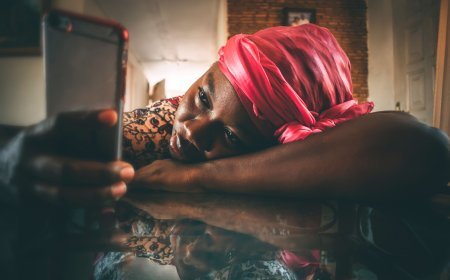
Image source: Bisous Harlem - Pinterest
When Kindness Equates Transaction
Without a shadow of a doubt, having a fear of owing someone can change the way a person experiences relationships. Instead of allowing generosity to move naturally between people, every favor can become something that needs to be repaid. Who paid last time? Who helped whom? Who was there when things went wrong? The relationship starts to resemble a private accounting system, with every act of kindness recorded somewhere in the back of the mind.
This can be observed in romantic relationships. Where your person constantly insists on doing everything themselves, under the guise that they are “protecting their independence," while you as their partner may experience that behavior as distance, which is valid. Being unable to receive care can unintentionally send the message that there is no real space for the other person to contribute. A relationship, after all, is not supposed to be a competition over who needs whom the least.
Independence Olympics
Modern culture has become remarkably good at turning independence into an identity. Women are encouraged to make their own money, build their own careers, and never rely entirely on a partner. Then men are expected to be providers, problem-solvers, and pillars of strength who should have an answer before anyone has finished asking the question. Social media has amplified these ideas into easily digestible slogans: “Never depend on anyone.” “Get your own money.” “Protect your peace.” “Know how to leave.”
Much of that advice has value. Financial independence can give someone the freedom to leave an unhealthy situation, while boundaries can protect people from relationships that demand too much from them. The problem begins when independence is treated as proof that a person should never need anyone at all. Somewhere along the way, being capable can turn into feeling obligated to prove that capability at every opportunity.
Fear Behind the "I've Got It"
Extreme self-sufficiency is not always about confidence. Sometimes, it is about control. For someone who has experienced unreliable relationships, broken promises, or having their generosity used against them, doing everything alone can feel like the safer option. There is comfort in knowing exactly what to expect when there is no one else to depend on. There is no disappointment when there are no expectations, and there is no debt when nobody is allowed to help.
That is where the line between independence and self-protection can become blurred. The person who insists they do not need anyone may not necessarily believe that they are stronger alone. They may simply have learned that depending on people comes with risks they would rather avoid. What looks like independence from the outside can sometimes be a carefully constructed form of emotional armor.
When the Strong Person Becomes the Lonely Person
There is an uncomfortable consequence to always being the capable one: eventually, people believe them. The friend who never asks for help may stop receiving offers. The colleague who always takes care of everything may become the person everyone automatically relies on. The partner who repeatedly says they are fine may eventually stop being asked whether they actually are.
This does not necessarily mean that the people around them have stopped caring. Sometimes, they have simply been given no reason to believe that their support is wanted. A person can become so accustomed to being the strong one that they forget other people may want the opportunity to be there for them too. Independence can protect someone from disappointment, but it can also prevent them from experiencing the kind of care they have spent years insisting they do not need.
Real Flex = Letting Someone Help
Perhaps the problem with the “independent woman/man” ideal is not independence itself, but the belief that independence must mean needing no one. Real autonomy should include the ability to choose when to stand alone and when to allow someone else to stand beside you.
Get this, not every favor is leverage. Not every act of kindness comes with a hidden price. Sometimes a friend pays for dinner because they wanted to. Sometimes a partner helps because they care. Sometimes someone shows up without expecting anything in return.
Learning to accept that can be difficult for someone who has built their identity around self-sufficiency. But there is a difference between being unable to do something alone and choosing not to do it alone.
Being able to carry everything is a strength. Believing that everything must always be carried alone is where that strength can become a wall.
What's Your Reaction?
 Like
0
Like
0
 Dislike
0
Dislike
0
 Love
0
Love
0
 Funny
0
Funny
0
 Angry
0
Angry
0
 Sad
0
Sad
0
 Wow
0
Wow
0