

















































Fela Didn't Invent Rebellion—He Just Inherited It
Funmilayo Ransome-Kuti's Life Story

Prefer listening? Tap play and the article will be read aloud.
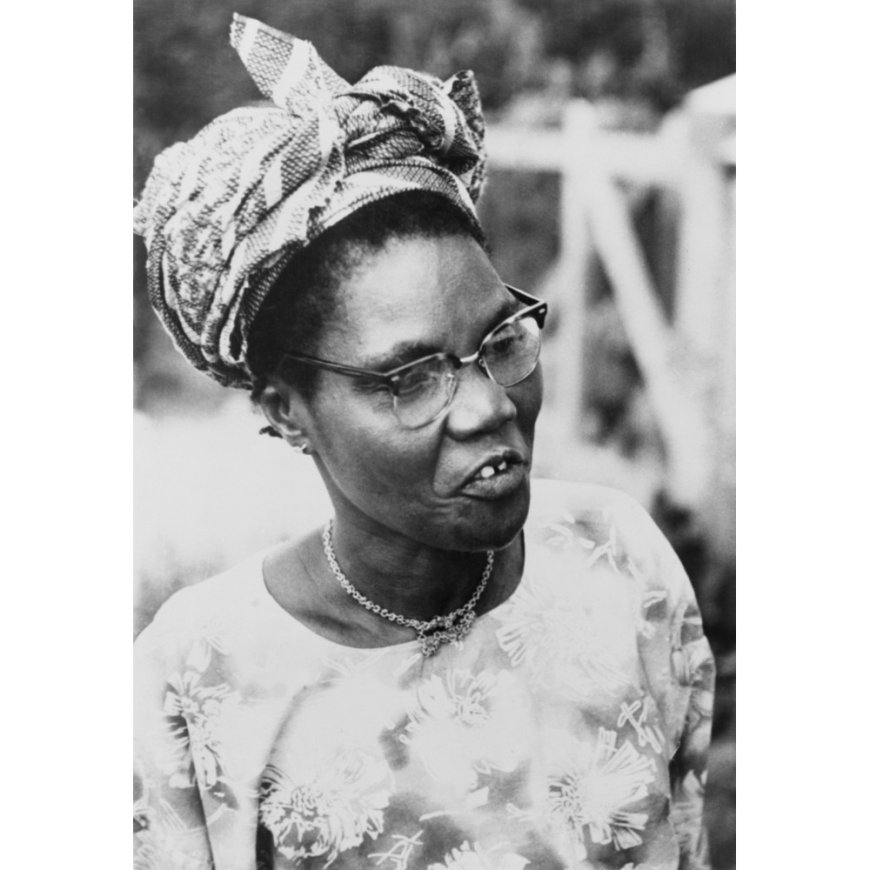
If you watched Funmilayo Ransome-Kuti on Prime Video and came away thinking, “Wait, why did we reduce this woman to being the first Nigerian woman to drive a car?" You are not alone.
Funmilayo Ransome-Kuti (1900-1978) was a prominent Nigerian educator, political campaigner, and women’s rights activist. She played a significant role in advocating for women’s rights and social justice, particularly for the Egba women in Abeokuta, Nigeria. Her biopic on Prime (also on YouTube) brings Funmilayo Ransome-Kuti’s story to life beyond the fun historical fact that you grew up knowing as if she didn’t do so much more. Her biopic is played by the ever-so-talented Kehinde Bankole, along with Joke Silva portraying her older years. Here's a glimpse of what to expect: it follows an educator, activist, and political campaigner who challenged both colonial authority and traditional power structures while advocating for women in Abeokuta.
Yes, it is entertaining, but most importantly, it leaves you with a few lessons that still feel uncomfortably relevant.
Courage Is a Practice
In everything that you know and think you know about Funmilayo, here’s one that you should take away: Funmilayo was not fearless. She simply refused to let fear make her decisions.
See, as you watch the film, the consistent pattern that you’d see is how she continuously confronts powerful men, challenges unfair treatment of women, and refuses to quietly accept the limitations placed on her. She was out there meeting male authorities, looking them in the eye and diplomatically letting them know how incompetent they were, debating her soon-to-be father-in-law, a man of God, on how it made no sense that he worshipped the same God imported by the white people who oppressed them. If that isn’t your definition of audacity, then get yourself checked. Her activism eventually contributed to the mobilization of Egba women against oppressive taxation and traditional authority.
The lioness of Lishabi, as she was popularly called, urges us to know that sometimes courage looks much smaller: asking the uncomfortable question, speaking up in the room, or refusing to accept something simply because “that is how it has always been done.”
Sisterhood Will Always Back You
She observed how the Alake of Oyo was taxing the market women and her fellow Yoruba women and causing them hardship. Knowing that made her step in; these market women, in return, recognized Funmilayo as their own, and together, they were able to put a stop to the unfair taxes levied against them. Her work with these women demonstrates the power of collective action, or, if you may, being your sister's keeper. The Abeokuta Women’s Union became an important platform through which women organized around issues affecting their livelihoods and communities. Now, as we all know, it's always empowering and exciting to watch women actually work together instead of being rivals and wanting to dim each other’s lights.
This is all to say that your tribe of women doesn’t have to literally be from your cultural tribe. That gworl group can be more than brunch, birthday dinners, and WhatsApp voice notes. Find women who will challenge you, who love you, and who genuinely want to see you being the best version of you. Cultivate friendships with women who prioritize your well-being in every aspect and watch you blossom.
Doubt Does Not Mean Stop
Even people doing extraordinary things can wonder whether they are making the right decision. Before the market, women accepted help from Funmilayo Ransome-Kuti and other elite women, although they doubted if they could make the traditional rulers submit to their request, which is fair. Some women among them even went as far as pointing out that Funmi lived in a bubble and would run back into it if things blew up. However, even with their backs against the wall, market women decided to trust the process. See, Funmilayo’s story does not present activism as a perfectly planned journey. Like in everyone’s life, there will always be moments of uncertainty, resistance, and setbacks. However the work continues always, life will not wait for you to be okay or “fit” enough to continue with it.
Now that right there is worth remembering because we often assume successful people had some secret confidence that the rest of us simply lack. Have you heard of do it scared? Uncertain? Shaking? Crying? Hungry? Well, maybe not hungry; eat small to get strength and sense abeg.
The point here is to continue embracing your doubts and still show up.
Choose Your People Carefully
As a married woman, Funmilayo Ransome-Kuti may not have lived a full life and stayed true to her calling if her spouse had been unsupportive. Her relationship with Israel Ransome-Kuti offers another interesting lesson: partnership should not require a woman to become smaller.
Oh that man supported her intellectual ambitions and did not treat her determination to create change as a threat. At a time when women had limited opportunities to build independent identities, that support mattered. And perhaps that is one of the film’s quieter messages. The people closest to you can either make your world bigger or spend their time trying to make you smaller. Funmilayo’s story reminds us that purpose, ambition, and partnership do not have to exist in separate boxes.
Still Relevant, Somehow
More than four decades after her death, Funmilayo Ransome-Kuti’s story still sparks questions about women's education, political participation, leadership, and collective action.
That is perhaps what makes the biopic worth watching, take it from someone who’s watched it countless times! It does not just introduce audiences to a remarkable historical figure. It gives us a chance to look at how much has changed, how much has not, and what happens when one woman decides that being told “no” is not the same thing as being defeated.
Now that you’ve read this, surely you won't see Funmilayo in the same lens as you did before. Funmilayo was not simply the woman who drove a car. She was a woman who decided she would not drive through life sitting quietly in the passenger seat.
What's Your Reaction?
 Like
0
Like
0
 Dislike
0
Dislike
0
 Love
0
Love
0
 Funny
0
Funny
0
 Angry
0
Angry
0
 Sad
0
Sad
0
 Wow
0
Wow
0