


























































Separate Bank Accounts in Marriage: A Growing Trend Among Nigerian Couples
From financial independence to family responsibilities, discover why some Nigerian couples are rethinking how they manage money in marriage.
Prefer listening? Tap play and the article will be read aloud.
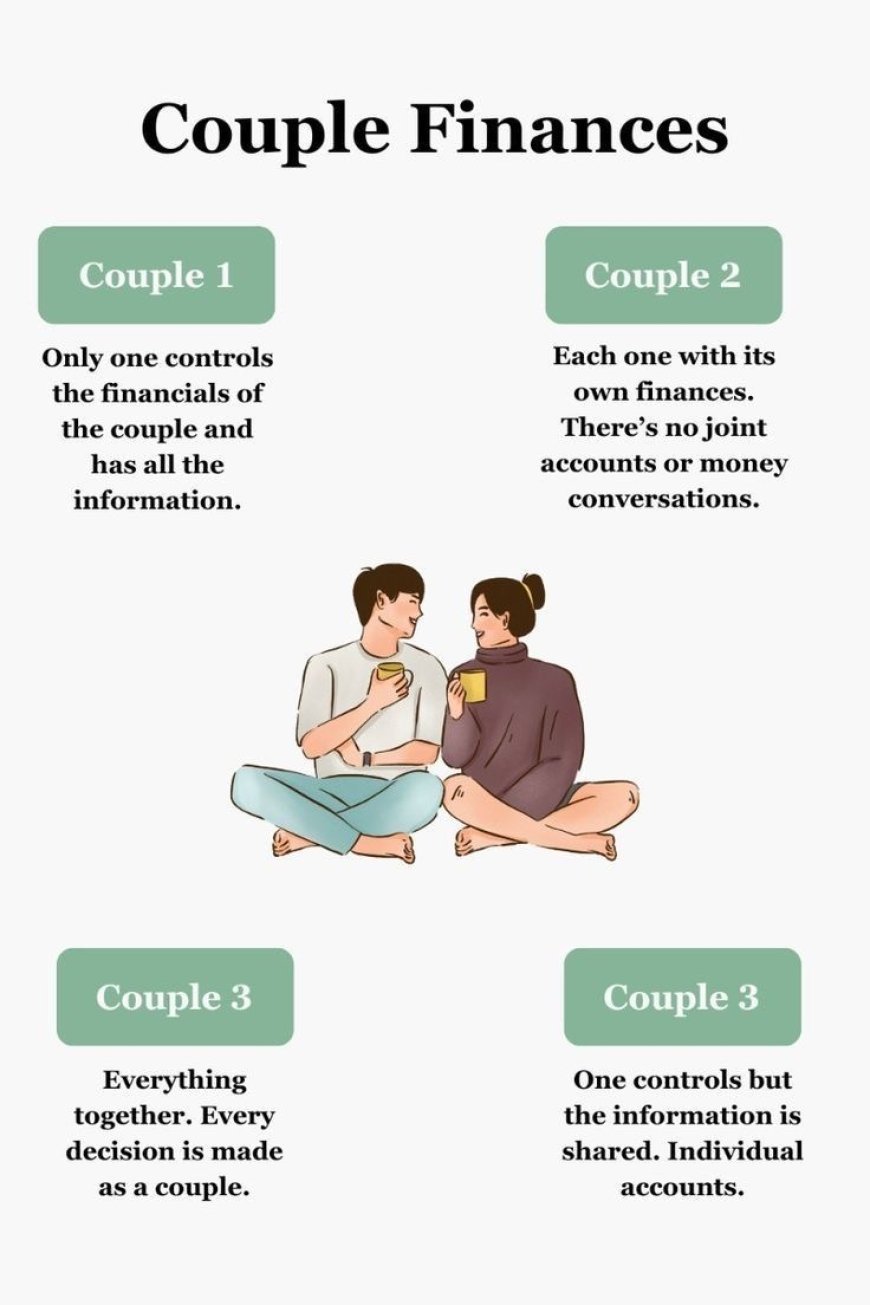
Traditionally, for many Nigerian couples, marriage is synonymous with being “one”. Many Nigerian couples tend to think of marriage as financial unity. In some cases, salaries may be combined, big expenses can be covered together, and sometimes it is considered suspicious to have separate finances.
However, there is an alternative that a few couples are now considering: maintaining separate bank accounts after marriage and establishing a plan for how to share funds.
This doesn't always mean avoiding giving money to your spouse or not giving to the household. But it can also mean having “my money, your money and our money”, where each partner has some financial independence, but also contributes to the life they are creating together.
But why do some couples opt for this option?
1. A personal account allows each partner to maintain control over their individual finances: This can be especially useful when both partners have an income. Rather than having to account for every personal expense, couples can agree beforehand on how much of their income will go towards household expenses and how much each person can keep for themselves. Financial independence doesn’t have to conflict with financial commitment. Each partner can have money of their own while still being fully committed to building a life and achieving shared goals with their spouse. At the same time, they can set aside money towards their individual and joint financial goals.
2. They save money in different ways: It's possible for two people to have a very strong love for one another and still not be on the same page when it comes to finances. One person might be saving for a home and the other partner wishes to invest in a business. The couple may also have different financial priorities such as building an emergency fund, or supporting their parents or siblings.
These differences can sometimes be sources of conflicts when all the money is in one account. Individual accounts let each partner work on his or her own financial objectives while chipping in a certain sum to the collective objectives. The important thing to remember is that personal needs shouldn't be ignored for family needs. Nigerian family responsibilities can be complicated. In a Nigerian family, the money can go beyond the family nucleus.
Marriage does not necessarily end a person’s financial responsibilities towards their parents, siblings or other relatives. School fees, medical costs, emergencies, family obligations or regular financial assistance can be among the factors to consider. This can get complicated if the extended family has different expectations of support from spouses.
One partner may feel that it is important for them to send money home each month. The other might think that the couple should focus on saving, investing or other household objectives. Separate accounts can provide some flexibility for each person to pursue their own family needs without compromising on their agreed contributions to the family. This is best suited to the time where both partners are clear about the big purchases. Separate doesn't have to be secret!
3. They spend their money in different ways: Imagine a couple in which one person looks at his bank balance before purchasing anything, while the other treats money as "it's there, it's for fun. Now transfer all their income into one account. The differences in spending habits could be a constant source of conflict. A bit of space may be provided by separate accounts. After both parties have made their contribution to the basic living costs of their household and have reached an agreement on the savings targets, each of them is free to use their own money in a way that is suitable in their own opinion. The giver is not controlled, and the saver is not the one who has to put up with a constant lack of self-restraint from the giver. This is only possible if both parties are fulfilling their duties.
4. Not all income is equal: Two people who are married don't always make the same money. One person may earn ₦500,000 a month while the other earns ₦200,000. One couple could be one person on a fixed salary and if one spouse is in a business, it could fluctuate monthly. This can be challenging when it comes to the 50/50 strategy. Alternatively, a couple with separate accounts may agree on a percentage of their income to be applied to the common accounts.
For instance, if both say they would contribute ₦200,000, instead they could give an agreed amount that is a percentage of their income. This can make the arrangement seem fairer, especially if there is a substantial disparity in income.
5. They desire to minimize financial quarrels: One of the areas where couples can easily get into trouble when it comes to money is budget. Debts, supporting relatives, spending, saving, and large purchases may be causes of arguments. Some of these conflicts can be lessened by establishing boundaries for personal spending with a separate account arrangement.
However, there's a catch, and that is that a different bank account is no solution to the poor communication. Couples still need to talk about their money, their debts, their duties, their savings, and big money moves. When one of the partners is concealing a debt or major financial obligation, separate accounts will not resolve the problem, they will simply cover it up.
Does separation of accounts make sense for all couples?
Not necessarily;
- For some, it is just the way they want it. They might find it easier to share finances and they may find the finances to be more transparent. Others may want to have their own monetary account. For others, the combination is the optimal solution. One size doesn't fit all when it comes to financial arrangements and successful marriages. The important thing is that both parties are aware of the deal and agree on the terms of the transactions.
- Couples should have open and honest conversations about their finances, including income, debt, spending, saving, family responsibilities, and shared financial objectives before separating accounts. They also must decide on what costs are shared and what their share is.
- It is not the bank account that matters: It's easy to lose sight of the big picture in the discussion on the pros and cons of joint versus separate accounts. It is important to remember that a joint account does not necessarily mean a trust. There's no rule saying that having a separate account means it is secret. The most important point is how the couple communicates and finances their relationship together. Two can have two separate bank accounts, pay two bills for the same home, save for the same house, invest together and plan for their children's future. Similarly, if two people do not discuss finances with each other, they can have one account and have quite serious financial issues. For some Nigerian couples, separate bank accounts are just a different approach to marriage, individual financial independence and collective financial responsibility.
- It's not ‘my money versus our money'. It is about determining who should have what, and how individuals can contribute to building a future together.
- Finally, the best financial deal is not the most conventional. It is the one that makes both partners feel respected, responsible and secure, without putting the needs and shared goals of the household behind.
What's Your Reaction?
 Like
0
 Dislike
0
 Love
0
 Funny
0
 Angry
0
 Sad
0
 Wow
0