










































Why Young People are Demanding More Control Over Their Digital Presence
Why a growing number of young people are setting boundaries around photos, videos, and what others share about them online.
Prefer listening? Tap play and the article will be read aloud.
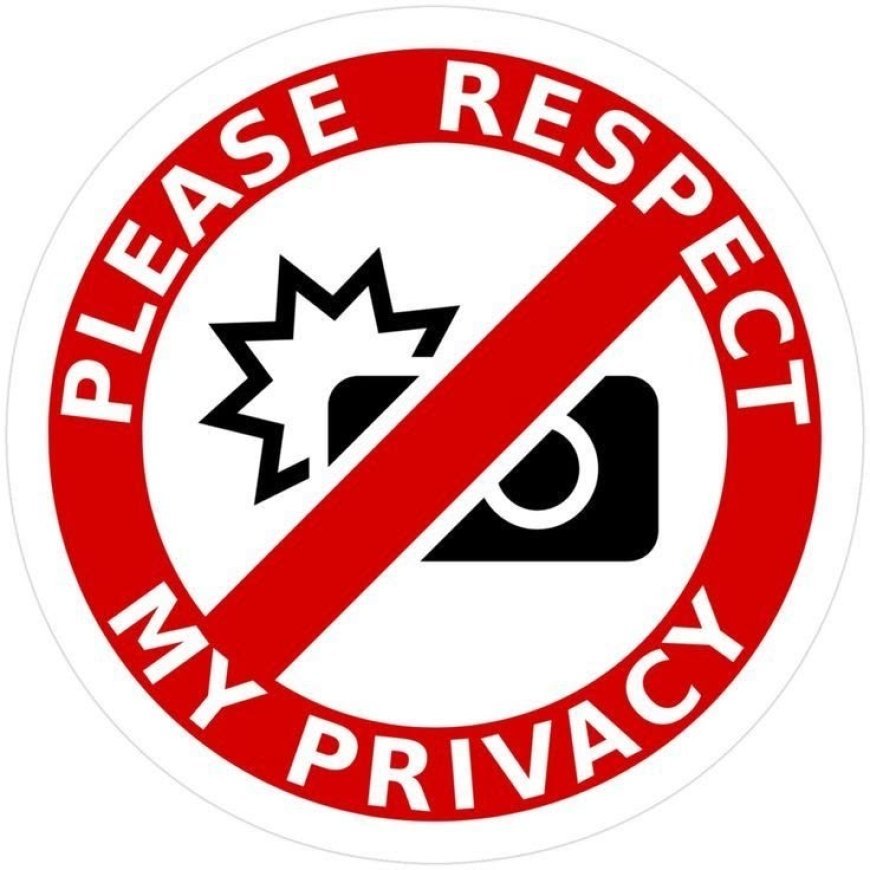
"Please don’t post me!".
It's a phrase that is gaining popularity among those who are active online but do not necessarily want to appear on everyone else's social media.
You attend a friend’s birthday party, take pictures together and before you know it, someone has uploaded them to Instagram. Maybe you looked great in the photos, but in any case, you certainly didn't want them on the internet .
For a generation that grew up documenting almost everything, the growing number of people asking others not to post them represents an interesting shift in how we think about privacy.
People aren't necessarily leaving social media. They are growing more selective in terms of where, how and by whom they are viewed online.
As explored in Why Everyone Wants to Be a “Private Person” Online, people are increasingly deciding which parts of their lives should remain offline.
When Your Privacy Is No Longer Completely Yours
It’s easy to be careful when posting on your own account. You can choose not to reveal your relationship, your location or your own accomplishments but what about when it's someone else who posts you?
You may be in the background of a friend's TikTok video, or in a group photo on Instagram or a birthday photo posted by someone you know without realizing that it's going online. Suddenly, your digital presence is not entirely under your control.
One of the issues of social media today is this. Your personal information does not only exist because you choose to upload it yourself. Friends, family members, colleagues and even strangers can contribute to your online footprint.
The National Data Protection Commission recommends that people on social media be mindful of the information they share online and the fact that seemingly harmless details can start to add up and paint a picture of people's lives and identities.
“But It’s Just a Picture”
To the person posting, it might seem genuinely harmless. “It's just a photo from dinner”. “It's just a party video”. “Nothing special, it’s just a simple selfie”.
However, the person in it might have a different view.
Perhaps they don't want their employers to know where they have been over the weekend, they have reasons to keep their appearances off the web, or they just don't want photos of themselves on the internet.
And at other times, it's not even privacy that’s a concern. Others just don't like some of the images. You may have a great photo of your friend that they don't think looks good. You may have a hilarious video you took together while your friend may not want anyone to watch. Just because you took the picture doesn't mean everyone in it would like to see it posted.
The Difference Between Taking a Picture and Publishing It
It's not the same thing to take a picture of a moment as it is to make that moment public. Friends could take pictures as a group and store them in their cell phones. They can send them individually or via a WhatsApp group.
If you post the same picture on a public or semi-public website, it becomes a different audience.
When a video or photo is posted, it can be saved, shared, taken as a screenshot and reposted. If the original post has been deleted, it does not mean that all copies have been removed. That is one reason why digital footprints are so crucial to take into account.
A detail that might not be important at 21 could be different years later. Even though your interests, friendships, appearance, relationships and lifestyle change, old content can still be linked to your name.
The “Don't Post Me” Rule Can Be About Boundaries
For some, refusal to be posted is just another way of establishing limits.
A person can still like social media, take photos and post humorous videos and choose that their relationship, family or life is not "public".
Privacy doesn’t always mean someone is hiding something. Sometimes, it only requires you to realize that people don’t want everything about themselves available to every person.
This is also important in the case of romantic relationships. Some people are choosing to keep their relationships away from social media, while others are questioning the pressure to publicly demonstrate that they are reaching certain milestones.
That broader pressure is also explored in The Pressure to Get Married in Your 20s, which looks at how young Nigerians are navigating expectations around relationships and adulthood.
Social Media has changed the meaning of a “Memory”.
For past generations, the act of taking a photograph usually meant the capture of a moment. In the present day, a photograph can serve multiple purposes.
It may be a memory but it can also be content, an update, a status symbol or a part of someone's online identity. That puts a slight pressure towards documenting experiences.
Birthdays aren't just a day out of the week and there is a possibility that people will expect you to post pictures of it. A holiday becomes a travel dump. A new relationship becomes a soft launch.
As people become more aware of this behavior, there are those who are taking the idea back to the concept that a moment can be meaningful even if nobody online knows of it.
A quiet dinner can still be a quiet dinner. Family get-togethers can be a family memory. And a funny moment with friends does not necessarily have to become a TikTok video compilation.
Why Young People Are Becoming More Protective of Their Image
Young people are super conscious of the quick spread of information online.
What was a witty joke today, may not be misunderstood years later. An embarrassing video can resurface unexpectedly. Randomly shared photos can reach out to a vast number of people beyond the original audience.
The Pew Research Center regularly researches social media use and how digital platforms have become part of people’s everyday lives and communication. For younger users who have spent much of their lives online, the internet can feel less like a separate digital world and more like an extension of real life. It is therefore vital to have control over one's digital identity.
It also gives you an idea as to why some people are more selective about the photos they're involved in, who tags them and what their friends post about them.
What's Your Reaction?
 Like
0
 Dislike
0
 Love
0
 Funny
0
 Angry
0
 Sad
0
 Wow
0