



































Migration: Africa’s Shared Issue
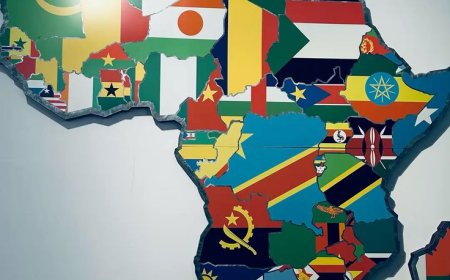
South Africa’s immigration policies have drawn criticism from Nigeria and Ghana, but the debate raises a bigger question about governance, forced migration and Africa’s shared responsibility to protect its people.

Prefer listening? Tap play and the article will be read aloud.

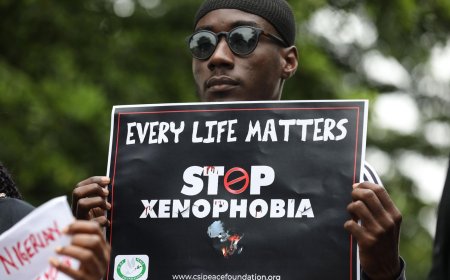
Nigeria and Ghana, two bordering West African countries that have been nothing but blunt about Pretoria’s eviction of undocumented immigrants, have little moral ground to criticize South Africa.
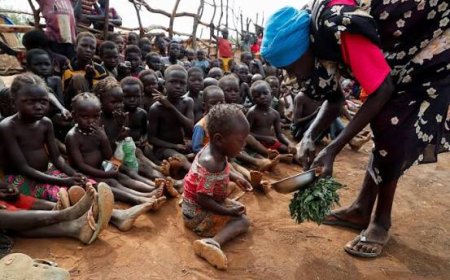
Specialists argue that both countries have failed their own citizens countless times, many of whom were forced to forsake their countries due to poor governance and repressive policies.
Critism Goes Both Ways
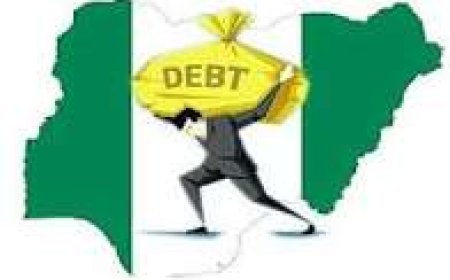
The argument from some analysts is that Nigeria and Ghana cannot discuss migration without also looking at the conditions that have pushed some of their citizens to leave in the first place. Their criticism points to broader problems such as economic difficulties, governance failures, and limited political participation, which they argue have contributed to migration from both countries.
There’s another political contradiction they highlight. Unlike South Africa, Nigeria and Ghana have historically placed restrictions on the political participation of citizens living abroad, particularly when it comes to voting. This raises a bigger question: if the governments in our countries are actually concerned about what treatment their nations receive abroad, what responsibilities do they have to handle the conditions that make those citizens seek opportunities elsewhere?
The international relations expert Dominic Maphaka has argued that Nigeria's and Ghana's criticism of South Africa exposes their weakness. “At the bilateral level, most of their nationals did not relocate to South Africa willingly but as a result of forced migration.” “At the multilateral level, they have reduced their commitments to the African Union’s (AU) Agenda 2063 to mere talk shops, as their weak economies have driven their nationals away," according to a Citizen.
Commitments to change the structure
He moved on to add that, “If anything, they should let the South African government listen to peaceful protesters and clamp down on vigilantism.” Maphaka stated that this could be resolved if South Africa stood firm in their bilateral engagements with Ghana and Nigeria and at the AU, where both these countries threatened to put this matter forward.
“These two countries must be where we are today,” he said as he went on to relive when the ANC took power in 1994. The analysts continued to argue that during that time South Africa became too big-headed about its constitutional model, sometimes dismissing what other African countries had to say.
“Undocumented immigrants are now using that constitution against the state, claiming rights legally. The courts are not wrong, they implement the laws as written,” Teffo said.
He went on to condemn the constitution’s blanket rights for creating such a migration management crisis.
Pan-Africanism Exaggeration
“We took Pan-Africanism to the extreme. We were romantic, euphoric, and triumphalist and thought we would lead the world on human rights. That has come back to bite us,” he said.
Mashego continued to say that Nigeria has long been in a battle with South Africa for continental dominance, while Ghana’s threat to take Pretoria to the International Criminal Court over alleged xenophobia is not backed with any facts.
“There is no basis for such a claim,” he said.
What's Your Reaction?
 Like
0
 Dislike
0
 Love
0
 Funny
0
 Angry
0
 Sad
0
 Wow
0