
























































Will AI Take Your Job? IMF Warns 40% of Jobs Worldwide Could Be Affected
As artificial intelligence transforms industries and workplace demands, what does the IMF’s warning mean for employees, graduates and the future of work?
Prefer listening? Tap play and the article will be read aloud.
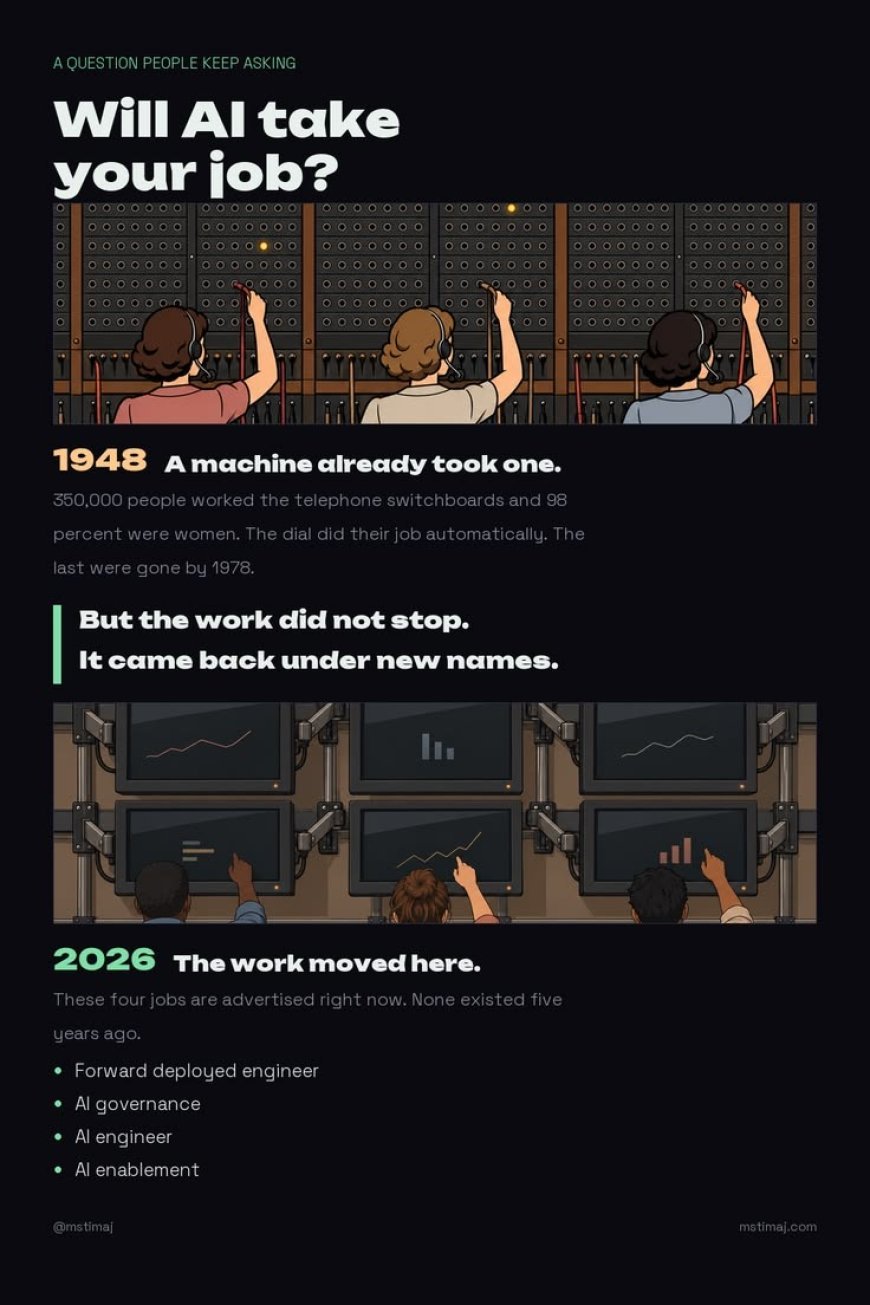
Imagine spending years studying for a career, only to discover that some of the tasks you trained to perform can now be completed by Artificial Intelligence (AI) in seconds.
For many workers, this is no longer a distant possibility. From writing reports and answering customer enquiries to analysing information and creating digital content, AI tools are changing how people work across different industries.
As businesses ramp up their use of artificial intelligence, the International Monetary Fund (IMF) has cautioned that some 40% of jobs globally could be impacted.
IMF Managing Director, Kristalina Georgieva spoke about the impact of AI on the global labour market during the IMF and World Bank annual meetings in Bangkok, Thailand, on October 12.
The technology may "reshape the current workforce, abate the worth of a few roles, or even take away some jobs." She explained.
But the 40% estimate by the IMF does not reflect the actual disappearance of 40% of jobs. Instead, it underscores the magnitude of possible transformations when companies adopt AI in their processes.
The Times report cited Georgieva's warning as a sign of growing concerns over the rapid advancement of AI technology and its potential impact on job and economic prospects.
The warning has brought back concerns over the future of work, especially among young people entering the workforce and workers whose jobs are increasingly being taken over by AI.
Why is AI a worry for employees?
Artificial Intelligence is a technology that involves computer systems that are able to do tasks which normally require human intelligence such as making texts, recognising patterns, analysing information and answering questions.
While AI has been around for years, having more generative AI tools at their fingertips has made the technology more accessible to businesses, students, and individuals.
Businesses now have the ability to leverage AI for duties like composing e-mails, summarising documents, digesting information, and addressing standard customer queries.
Using these applications can also boost productivity and save time, but questions have been raised on whether businesses will still have need to hire staffs to complete tasks.
For instance, a business that used to have multiple staff members to process simple inquiries could implement an AI-powered customer service system to take care of some of that work.
In the same way, companies can leverage AI to create preliminary versions of reports, generate marketing strategies, or analyze vast quantities of data.
But these tools are not the end to the point of avoiding human workers. Staff may still be expected to check information, manage complex scenarios, use professional judgment and decision making.
The impact will vary according to the use of the technology by the organisations and the nature of job changes.
What jobs might be the most impacted?
The IMF analysis suggests exposure to AI is different for different jobs and for different economies.
As businesses experience new technologies, jobs with tasks that can be accomplished or assisted with computer systems can undergo significant changes.
Some areas where AI can automate or support specific tasks include administrative tasks, data processing, and simple content creation and customer service.
There are other jobs that are undergoing changes as well, such as jobs in finance, law and education, which may also be impacted by the use of AI tools.
In other jobs, AI might enable workers to finish tasks faster, allowing them more time to give attention to tasks that demand human judgement, creativity or interpersonal skills.
For example, a writer can leverage AI to organise their research notes or a teacher to create lesson plans. AI-powered tools could be used to help a healthcare professional organize information, but the healthcare provider would still be responsible for delivering patient care.
The difference lies between jobs that can be reshaped by AI and those that could be completely taken away.
The IMF published an article in January 2026 detailing how the use of AI was evolving and transforming the skills that employers were looking for, which highlighted the need to support workers in meeting new demands.
The movement towards new skills is discussed on the organisation's website, in the article New Skills and AI Are Reshaping the Future of Work.
What does this mean for young people looking for jobs?
AI is a specific problem for those who are just entering the job market, which is already competitive.
Graduates typically start their jobs as junior staff on basic tasks including preparing documents, research, record organization, and answering basic questions.
With the rise of AI tools, some of these roles might evolve or new ones could emerge, influencing the number and types of entry-level positions.
Concurrently, new positions can be created in AI development, implementation, monitoring, and data management. Employees may also have to acquire new skills to stay competitive, as employers' expectations evolve.
New skills such as digital literacy, critical thinking, communication, problem-solving and learning new tools will grow in importance.
But it shouldn't be up to individual workers alone. But employers, educational institutions and governments also play a part in supporting individuals to prepare for labour market change.
The shift has both opportunities and challenges in the developing world, Nigeria included. While AI has the potential to boost productivity and access new markets for businesses, employees might struggle if training and access to technology do not match the rate of adoption.
These impacts will vary based on regional economic circumstances and the nature of employment, as well as the rate at which companies adopt AI tools.
What's Your Reaction?
 Like
0
 Dislike
0
 Love
0
 Funny
0
 Angry
0
 Sad
0
 Wow
0